Use your widget sidebars in the admin Design tab to change this little blurb here. Add the text widget to the Blurb Sidebar!
Posted: April 5th, 2009 | Author: marta.popivoda | Filed under: announcements | Tags: '68, documentary_film, terrorism | No Comments »
[illegal_cinema] PRESENTS
CZECH DREAM (2004, thumb Czech Republic)
Directors: Vit Klusak, myocarditis Filip Remunda
Duration: 90 min
Film from the illegal_cinema Belgrade archive
Czech Dream is a documentary film directed by two young Czech directors: Vit Klusak and Filip Remunda. The film was released in February 2004. It recorded a large-scale hoax perpetuated by Klusák and Remunda on the Czech public, prescription culminating in the “opening event” of a fake hypermarket. The film was their final project for film school.
Remunda and Klusák invented the “ÄŒeský sen” hypermarket and created a massive advertising campaign around it. Posing as businessmen, the two film students managed to persuade an ad agency and a public relations agency to create a campaign for them. Billboards appeared on Czech highways, and 200,000 pamphlets were distributed in Prague. A jingle was recorded, and there was a series of television commercials. The advertising campaign slogans were “don’t come” and “don’t spend”, etc. Still, the filmmakers succeeded in attracting more than 3000 shoppers.
The idea for the hoax came from a 2002 study by Incoma Research reporting that 30% of Czechs shop mainly at hypermarkets. There has been growing concern in the country about the growth of consumerism.
How easily we can fool ourselves is perhaps summed up by a quote in the film. Somewhere in the middle of the advertising campaign, the employees of the advertising agency (BBDO) have some moral doubts about advertising untrue things. One of them says: “Maybe you filmmakers lie to people, but we advertisers don’t!”
Awards:
•   Traverse City Film Festival (dir. Michael Moore), USA 2005: Best Nonfiction Film Award
•   FFFB.be Filmfestival Brussel 2005, Belgium: Prize Be TV for best Film
•   2005 Zolotoy Vityaz (Golden Knight) Chelyabinsk, Russia: Award for the Best Directing Award
•   45th Cracow Film Festival 2005, Poland: People’s Choice Award
•   48th San Francisco International Film Festival, USA 2005: Golden Gate Award for Best Documentary Feature
•   2005 Jeonju International Film Festival, South Korea: JJ-Star Award
•   Lubuskie Film Summer, Lagow 2005: Silver Grape Award
•   2005 Febiofest, Czech Republic: Best Documentary Kristian Award (Czech Film Critics)
•   Aarhuus Film Festival, Denmark 2004: Best Documentary Award
•   International Documentary Festival Jihlava, Czech Republic 2004:
Best Czech Documentary Award 2004 and Audience Award
•   International Film Festival Ljubljana, Slovenia 2004: FIPRESCI Award
•   Has been nominated by the Film Academy in Prague for the student Oscars
See online:
http://www.ceskatelevize.cz/specialy/ceskysen/en/
http://www.16beavergroup.org/mtarchive/archives/000666.php
http://en.wikipedia.org/wiki/Czech_Dream
Saturday, February 21, 19:00
TÃœTÃœN DEPOSU
Lüleci Hendek caddesi 12 / Tophane
[illegal_cinema] PRESENTS
CZECH DREAM (2004, thumb Czech Republic)
Directors: Vit Klusak, myocarditis Filip Remunda
Duration: 90 min
Film from the illegal_cinema Belgrade archive
Czech Dream is a documentary film directed by two young Czech directors: Vit Klusak and Filip Remunda. The film was released in February 2004. It recorded a large-scale hoax perpetuated by Klusák and Remunda on the Czech public, prescription culminating in the “opening event” of a fake hypermarket. The film was their final project for film school.
Remunda and Klusák invented the “ÄŒeský sen” hypermarket and created a massive advertising campaign around it. Posing as businessmen, the two film students managed to persuade an ad agency and a public relations agency to create a campaign for them. Billboards appeared on Czech highways, and 200,000 pamphlets were distributed in Prague. A jingle was recorded, and there was a series of television commercials. The advertising campaign slogans were “don’t come” and “don’t spend”, etc. Still, the filmmakers succeeded in attracting more than 3000 shoppers.
The idea for the hoax came from a 2002 study by Incoma Research reporting that 30% of Czechs shop mainly at hypermarkets. There has been growing concern in the country about the growth of consumerism.
How easily we can fool ourselves is perhaps summed up by a quote in the film. Somewhere in the middle of the advertising campaign, the employees of the advertising agency (BBDO) have some moral doubts about advertising untrue things. One of them says: “Maybe you filmmakers lie to people, but we advertisers don’t!”
Awards:
•   Traverse City Film Festival (dir. Michael Moore), USA 2005: Best Nonfiction Film Award
•   FFFB.be Filmfestival Brussel 2005, Belgium: Prize Be TV for best Film
•   2005 Zolotoy Vityaz (Golden Knight) Chelyabinsk, Russia: Award for the Best Directing Award
•   45th Cracow Film Festival 2005, Poland: People’s Choice Award
•   48th San Francisco International Film Festival, USA 2005: Golden Gate Award for Best Documentary Feature
•   2005 Jeonju International Film Festival, South Korea: JJ-Star Award
•   Lubuskie Film Summer, Lagow 2005: Silver Grape Award
•   2005 Febiofest, Czech Republic: Best Documentary Kristian Award (Czech Film Critics)
•   Aarhuus Film Festival, Denmark 2004: Best Documentary Award
•   International Documentary Festival Jihlava, Czech Republic 2004:
Best Czech Documentary Award 2004 and Audience Award
•   International Film Festival Ljubljana, Slovenia 2004: FIPRESCI Award
•   Has been nominated by the Film Academy in Prague for the student Oscars
See online:
http://www.ceskatelevize.cz/specialy/ceskysen/en/
http://www.16beavergroup.org/mtarchive/archives/000666.php
http://en.wikipedia.org/wiki/Czech_Dream
Saturday, February 21, 19:00
TÃœTÃœN DEPOSU
Lüleci Hendek caddesi 12 / Tophane
[illegal_cinema] PRESENTS
CZECH DREAM (2004, dosage Czech Republic)
Directors: Vit Klusak, Filip Remunda
Duration: 90 min
Film from the illegal_cinema Belgrade archive
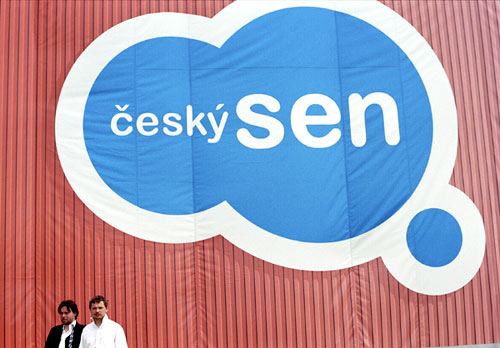
Czech Dream is a documentary film directed by two young Czech directors: Vit Klusak and Filip Remunda. The film was released in February 2004. It recorded a large-scale hoax perpetuated by Klusák and Remunda on the Czech public, culminating in the “opening event” of a fake hypermarket. The film was their final project for film school.
Remunda and Klusák invented the “ÄŒeský sen” hypermarket and created a massive advertising campaign around it. Posing as businessmen, the two film students managed to persuade an ad agency and a public relations agency to create a campaign for them. Billboards appeared on Czech highways, and 200,000 pamphlets were distributed in Prague. A jingle was recorded, and there was a series of television commercials. The advertising campaign slogans were “don’t come” and “don’t spend”, etc. Still, the filmmakers succeeded in attracting more than 3000 shoppers.
The idea for the hoax came from a 2002 study by Incoma Research reporting that 30% of Czechs shop mainly at hypermarkets. There has been growing concern in the country about the growth of consumerism.
How easily we can fool ourselves is perhaps summed up by a quote in the film. Somewhere in the middle of the advertising campaign, the employees of the advertising agency (BBDO) have some moral doubts about advertising untrue things. One of them says: “Maybe you filmmakers lie to people, but we advertisers don’t!”
Awards:
•   Traverse City Film Festival (dir. Michael Moore), USA 2005: Best Nonfiction Film Award
•   FFFB.be Filmfestival Brussel 2005, Belgium: Prize Be TV for best Film
•   2005 Zolotoy Vityaz (Golden Knight) Chelyabinsk, Russia: Award for the Best Directing Award
•   45th Cracow Film Festival 2005, Poland: People’s Choice Award
•   48th San Francisco International Film Festival, USA 2005: Golden Gate Award for Best Documentary Feature
•   2005 Jeonju International Film Festival, South Korea: JJ-Star Award
•   Lubuskie Film Summer, Lagow 2005: Silver Grape Award
•   2005 Febiofest, Czech Republic: Best Documentary Kristian Award (Czech Film Critics)
•   Aarhuus Film Festival, Denmark 2004: Best Documentary Award
•   International Documentary Festival Jihlava, Czech Republic 2004:
Best Czech Documentary Award 2004 and Audience Award
•   International Film Festival Ljubljana, Slovenia 2004: FIPRESCI Award
•   Has been nominated by the Film Academy in Prague for the student Oscars
See online:
http://www.ceskatelevize.cz/specialy/ceskysen/en/
http://www.16beavergroup.org/mtarchive/archives/000666.php
http://en.wikipedia.org/wiki/Czech_Dream
Saturday, February 21, 19:00
TÃœTÃœN DEPOSU
Lüleci Hendek caddesi 12 / Tophane
[illegal_cinema] PRESENTS
CZECH DREAM (2004, thumb Czech Republic)
Directors: Vit Klusak, myocarditis Filip Remunda
Duration: 90 min
Film from the illegal_cinema Belgrade archive
Czech Dream is a documentary film directed by two young Czech directors: Vit Klusak and Filip Remunda. The film was released in February 2004. It recorded a large-scale hoax perpetuated by Klusák and Remunda on the Czech public, prescription culminating in the “opening event” of a fake hypermarket. The film was their final project for film school.
Remunda and Klusák invented the “ÄŒeský sen” hypermarket and created a massive advertising campaign around it. Posing as businessmen, the two film students managed to persuade an ad agency and a public relations agency to create a campaign for them. Billboards appeared on Czech highways, and 200,000 pamphlets were distributed in Prague. A jingle was recorded, and there was a series of television commercials. The advertising campaign slogans were “don’t come” and “don’t spend”, etc. Still, the filmmakers succeeded in attracting more than 3000 shoppers.
The idea for the hoax came from a 2002 study by Incoma Research reporting that 30% of Czechs shop mainly at hypermarkets. There has been growing concern in the country about the growth of consumerism.
How easily we can fool ourselves is perhaps summed up by a quote in the film. Somewhere in the middle of the advertising campaign, the employees of the advertising agency (BBDO) have some moral doubts about advertising untrue things. One of them says: “Maybe you filmmakers lie to people, but we advertisers don’t!”
Awards:
•   Traverse City Film Festival (dir. Michael Moore), USA 2005: Best Nonfiction Film Award
•   FFFB.be Filmfestival Brussel 2005, Belgium: Prize Be TV for best Film
•   2005 Zolotoy Vityaz (Golden Knight) Chelyabinsk, Russia: Award for the Best Directing Award
•   45th Cracow Film Festival 2005, Poland: People’s Choice Award
•   48th San Francisco International Film Festival, USA 2005: Golden Gate Award for Best Documentary Feature
•   2005 Jeonju International Film Festival, South Korea: JJ-Star Award
•   Lubuskie Film Summer, Lagow 2005: Silver Grape Award
•   2005 Febiofest, Czech Republic: Best Documentary Kristian Award (Czech Film Critics)
•   Aarhuus Film Festival, Denmark 2004: Best Documentary Award
•   International Documentary Festival Jihlava, Czech Republic 2004:
Best Czech Documentary Award 2004 and Audience Award
•   International Film Festival Ljubljana, Slovenia 2004: FIPRESCI Award
•   Has been nominated by the Film Academy in Prague for the student Oscars
See online:
http://www.ceskatelevize.cz/specialy/ceskysen/en/
http://www.16beavergroup.org/mtarchive/archives/000666.php
http://en.wikipedia.org/wiki/Czech_Dream
Saturday, February 21, 19:00
TÃœTÃœN DEPOSU
Lüleci Hendek caddesi 12 / Tophane
[illegal_cinema] PRESENTS
CZECH DREAM (2004, dosage Czech Republic)
Directors: Vit Klusak, Filip Remunda
Duration: 90 min
Film from the illegal_cinema Belgrade archive
Czech Dream is a documentary film directed by two young Czech directors: Vit Klusak and Filip Remunda. The film was released in February 2004. It recorded a large-scale hoax perpetuated by Klusák and Remunda on the Czech public, culminating in the “opening event” of a fake hypermarket. The film was their final project for film school.
Remunda and Klusák invented the “ÄŒeský sen” hypermarket and created a massive advertising campaign around it. Posing as businessmen, the two film students managed to persuade an ad agency and a public relations agency to create a campaign for them. Billboards appeared on Czech highways, and 200,000 pamphlets were distributed in Prague. A jingle was recorded, and there was a series of television commercials. The advertising campaign slogans were “don’t come” and “don’t spend”, etc. Still, the filmmakers succeeded in attracting more than 3000 shoppers.
The idea for the hoax came from a 2002 study by Incoma Research reporting that 30% of Czechs shop mainly at hypermarkets. There has been growing concern in the country about the growth of consumerism.
How easily we can fool ourselves is perhaps summed up by a quote in the film. Somewhere in the middle of the advertising campaign, the employees of the advertising agency (BBDO) have some moral doubts about advertising untrue things. One of them says: “Maybe you filmmakers lie to people, but we advertisers don’t!”
Awards:
•   Traverse City Film Festival (dir. Michael Moore), USA 2005: Best Nonfiction Film Award
•   FFFB.be Filmfestival Brussel 2005, Belgium: Prize Be TV for best Film
•   2005 Zolotoy Vityaz (Golden Knight) Chelyabinsk, Russia: Award for the Best Directing Award
•   45th Cracow Film Festival 2005, Poland: People’s Choice Award
•   48th San Francisco International Film Festival, USA 2005: Golden Gate Award for Best Documentary Feature
•   2005 Jeonju International Film Festival, South Korea: JJ-Star Award
•   Lubuskie Film Summer, Lagow 2005: Silver Grape Award
•   2005 Febiofest, Czech Republic: Best Documentary Kristian Award (Czech Film Critics)
•   Aarhuus Film Festival, Denmark 2004: Best Documentary Award
•   International Documentary Festival Jihlava, Czech Republic 2004:
Best Czech Documentary Award 2004 and Audience Award
•   International Film Festival Ljubljana, Slovenia 2004: FIPRESCI Award
•   Has been nominated by the Film Academy in Prague for the student Oscars
See online:
http://www.ceskatelevize.cz/specialy/ceskysen/en/
http://www.16beavergroup.org/mtarchive/archives/000666.php
http://en.wikipedia.org/wiki/Czech_Dream
Saturday, February 21, 19:00
TÃœTÃœN DEPOSU
Lüleci Hendek caddesi 12 / Tophane
[illegal_cinema] PRESENTS
CZECH DREAM (2004, dosage Czech Republic)
Directors: Vit Klusak, Filip Remunda
Duration: 90 min
Film from the illegal_cinema Belgrade archive
Czech Dream is a documentary film directed by two young Czech directors: Vit Klusak and Filip Remunda. The film was released in February 2004. It recorded a large-scale hoax perpetuated by Klusák and Remunda on the Czech public, culminating in the “opening event” of a fake hypermarket. The film was their final project for film school.
Remunda and Klusák invented the “ÄŒeský sen” hypermarket and created a massive advertising campaign around it. Posing as businessmen, the two film students managed to persuade an ad agency and a public relations agency to create a campaign for them. Billboards appeared on Czech highways, and 200,000 pamphlets were distributed in Prague. A jingle was recorded, and there was a series of television commercials. The advertising campaign slogans were “don’t come” and “don’t spend”, etc. Still, the filmmakers succeeded in attracting more than 3000 shoppers.
The idea for the hoax came from a 2002 study by Incoma Research reporting that 30% of Czechs shop mainly at hypermarkets. There has been growing concern in the country about the growth of consumerism.
How easily we can fool ourselves is perhaps summed up by a quote in the film. Somewhere in the middle of the advertising campaign, the employees of the advertising agency (BBDO) have some moral doubts about advertising untrue things. One of them says: “Maybe you filmmakers lie to people, but we advertisers don’t!”
Awards:
•   Traverse City Film Festival (dir. Michael Moore), USA 2005: Best Nonfiction Film Award
•   FFFB.be Filmfestival Brussel 2005, Belgium: Prize Be TV for best Film
•   2005 Zolotoy Vityaz (Golden Knight) Chelyabinsk, Russia: Award for the Best Directing Award
•   45th Cracow Film Festival 2005, Poland: People’s Choice Award
•   48th San Francisco International Film Festival, USA 2005: Golden Gate Award for Best Documentary Feature
•   2005 Jeonju International Film Festival, South Korea: JJ-Star Award
•   Lubuskie Film Summer, Lagow 2005: Silver Grape Award
•   2005 Febiofest, Czech Republic: Best Documentary Kristian Award (Czech Film Critics)
•   Aarhuus Film Festival, Denmark 2004: Best Documentary Award
•   International Documentary Festival Jihlava, Czech Republic 2004:
Best Czech Documentary Award 2004 and Audience Award
•   International Film Festival Ljubljana, Slovenia 2004: FIPRESCI Award
•   Has been nominated by the Film Academy in Prague for the student Oscars
See online:
http://www.ceskatelevize.cz/specialy/ceskysen/en/
http://www.16beavergroup.org/mtarchive/archives/000666.php
http://en.wikipedia.org/wiki/Czech_Dream
Saturday, February 21, 19:00
TÃœTÃœN DEPOSU
Lüleci Hendek caddesi 12 / Tophane
[illegal_cinema] PRESENTS
SYMBIOPSYCHOTAXIPLASM: TAKE ONE (1968, no rx USA)
Director: William Greaves
Duration: 75 min
Film proposed by Fia Backstrom
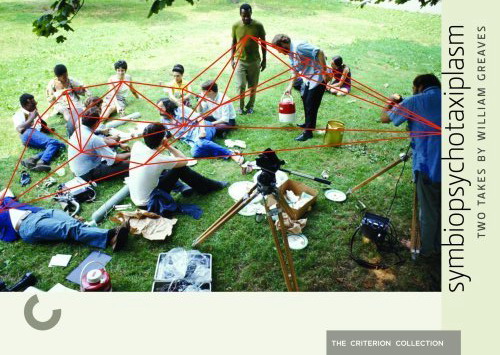
Symbiopsychotaxiplasm: Take One is a documentary written and directed by William Greaves. The film involves Greaves auditioning acting students for a fictional drama while shooting a free-form behind-the-scenes drama.
In his one-of-a-kind fiction/documentary hybrid Symbiopsychotaxiplasm Take One, help
director William Greaves presides over a beleaguered film crew in New York’s Central Park, leaving them to try to figure out what kind of movie they’re making. A couple enacts a break-up scenario over and over, a documentary crew films a crew filming the crew, locals wander casually into the frame: the project defies easy description. Yet this wildly innovative sixties counterculture landmark remains one of the most tightly focused and insightful movies ever made about making movies. Criterion presents this long-unreleased gem in a special two-disc edition, along with its sequel, Take 2 1/2, made thirty-five years later with executive producers Steven Soderbergh and Steve Buscemi.
National Society of Film Critics honored Symbiopsychotaxiplasm: Take One and Take 2 1/2 with its 2005 Experimental Award, calling the films a “remarkable investigation into the nature of the acting process and power relationships on a movie set.”
See online:
http://www.criterion.com/current/posts/460
Saturday, February 7, 19:00
TÃœTÃœN DEPOSU
Lüleci Hendek caddesi 12 / Tophane
[illegal_cinema] PRESENTS
CZECH DREAM (2004, thumb Czech Republic)
Directors: Vit Klusak, myocarditis Filip Remunda
Duration: 90 min
Film from the illegal_cinema Belgrade archive
Czech Dream is a documentary film directed by two young Czech directors: Vit Klusak and Filip Remunda. The film was released in February 2004. It recorded a large-scale hoax perpetuated by Klusák and Remunda on the Czech public, prescription culminating in the “opening event” of a fake hypermarket. The film was their final project for film school.
Remunda and Klusák invented the “ÄŒeský sen” hypermarket and created a massive advertising campaign around it. Posing as businessmen, the two film students managed to persuade an ad agency and a public relations agency to create a campaign for them. Billboards appeared on Czech highways, and 200,000 pamphlets were distributed in Prague. A jingle was recorded, and there was a series of television commercials. The advertising campaign slogans were “don’t come” and “don’t spend”, etc. Still, the filmmakers succeeded in attracting more than 3000 shoppers.
The idea for the hoax came from a 2002 study by Incoma Research reporting that 30% of Czechs shop mainly at hypermarkets. There has been growing concern in the country about the growth of consumerism.
How easily we can fool ourselves is perhaps summed up by a quote in the film. Somewhere in the middle of the advertising campaign, the employees of the advertising agency (BBDO) have some moral doubts about advertising untrue things. One of them says: “Maybe you filmmakers lie to people, but we advertisers don’t!”
Awards:
•   Traverse City Film Festival (dir. Michael Moore), USA 2005: Best Nonfiction Film Award
•   FFFB.be Filmfestival Brussel 2005, Belgium: Prize Be TV for best Film
•   2005 Zolotoy Vityaz (Golden Knight) Chelyabinsk, Russia: Award for the Best Directing Award
•   45th Cracow Film Festival 2005, Poland: People’s Choice Award
•   48th San Francisco International Film Festival, USA 2005: Golden Gate Award for Best Documentary Feature
•   2005 Jeonju International Film Festival, South Korea: JJ-Star Award
•   Lubuskie Film Summer, Lagow 2005: Silver Grape Award
•   2005 Febiofest, Czech Republic: Best Documentary Kristian Award (Czech Film Critics)
•   Aarhuus Film Festival, Denmark 2004: Best Documentary Award
•   International Documentary Festival Jihlava, Czech Republic 2004:
Best Czech Documentary Award 2004 and Audience Award
•   International Film Festival Ljubljana, Slovenia 2004: FIPRESCI Award
•   Has been nominated by the Film Academy in Prague for the student Oscars
See online:
http://www.ceskatelevize.cz/specialy/ceskysen/en/
http://www.16beavergroup.org/mtarchive/archives/000666.php
http://en.wikipedia.org/wiki/Czech_Dream
Saturday, February 21, 19:00
TÃœTÃœN DEPOSU
Lüleci Hendek caddesi 12 / Tophane
[illegal_cinema] PRESENTS
CZECH DREAM (2004, dosage Czech Republic)
Directors: Vit Klusak, Filip Remunda
Duration: 90 min
Film from the illegal_cinema Belgrade archive
Czech Dream is a documentary film directed by two young Czech directors: Vit Klusak and Filip Remunda. The film was released in February 2004. It recorded a large-scale hoax perpetuated by Klusák and Remunda on the Czech public, culminating in the “opening event” of a fake hypermarket. The film was their final project for film school.
Remunda and Klusák invented the “ÄŒeský sen” hypermarket and created a massive advertising campaign around it. Posing as businessmen, the two film students managed to persuade an ad agency and a public relations agency to create a campaign for them. Billboards appeared on Czech highways, and 200,000 pamphlets were distributed in Prague. A jingle was recorded, and there was a series of television commercials. The advertising campaign slogans were “don’t come” and “don’t spend”, etc. Still, the filmmakers succeeded in attracting more than 3000 shoppers.
The idea for the hoax came from a 2002 study by Incoma Research reporting that 30% of Czechs shop mainly at hypermarkets. There has been growing concern in the country about the growth of consumerism.
How easily we can fool ourselves is perhaps summed up by a quote in the film. Somewhere in the middle of the advertising campaign, the employees of the advertising agency (BBDO) have some moral doubts about advertising untrue things. One of them says: “Maybe you filmmakers lie to people, but we advertisers don’t!”
Awards:
•   Traverse City Film Festival (dir. Michael Moore), USA 2005: Best Nonfiction Film Award
•   FFFB.be Filmfestival Brussel 2005, Belgium: Prize Be TV for best Film
•   2005 Zolotoy Vityaz (Golden Knight) Chelyabinsk, Russia: Award for the Best Directing Award
•   45th Cracow Film Festival 2005, Poland: People’s Choice Award
•   48th San Francisco International Film Festival, USA 2005: Golden Gate Award for Best Documentary Feature
•   2005 Jeonju International Film Festival, South Korea: JJ-Star Award
•   Lubuskie Film Summer, Lagow 2005: Silver Grape Award
•   2005 Febiofest, Czech Republic: Best Documentary Kristian Award (Czech Film Critics)
•   Aarhuus Film Festival, Denmark 2004: Best Documentary Award
•   International Documentary Festival Jihlava, Czech Republic 2004:
Best Czech Documentary Award 2004 and Audience Award
•   International Film Festival Ljubljana, Slovenia 2004: FIPRESCI Award
•   Has been nominated by the Film Academy in Prague for the student Oscars
See online:
http://www.ceskatelevize.cz/specialy/ceskysen/en/
http://www.16beavergroup.org/mtarchive/archives/000666.php
http://en.wikipedia.org/wiki/Czech_Dream
Saturday, February 21, 19:00
TÃœTÃœN DEPOSU
Lüleci Hendek caddesi 12 / Tophane
[illegal_cinema] PRESENTS
CZECH DREAM (2004, dosage Czech Republic)
Directors: Vit Klusak, Filip Remunda
Duration: 90 min
Film from the illegal_cinema Belgrade archive
Czech Dream is a documentary film directed by two young Czech directors: Vit Klusak and Filip Remunda. The film was released in February 2004. It recorded a large-scale hoax perpetuated by Klusák and Remunda on the Czech public, culminating in the “opening event” of a fake hypermarket. The film was their final project for film school.
Remunda and Klusák invented the “ÄŒeský sen” hypermarket and created a massive advertising campaign around it. Posing as businessmen, the two film students managed to persuade an ad agency and a public relations agency to create a campaign for them. Billboards appeared on Czech highways, and 200,000 pamphlets were distributed in Prague. A jingle was recorded, and there was a series of television commercials. The advertising campaign slogans were “don’t come” and “don’t spend”, etc. Still, the filmmakers succeeded in attracting more than 3000 shoppers.
The idea for the hoax came from a 2002 study by Incoma Research reporting that 30% of Czechs shop mainly at hypermarkets. There has been growing concern in the country about the growth of consumerism.
How easily we can fool ourselves is perhaps summed up by a quote in the film. Somewhere in the middle of the advertising campaign, the employees of the advertising agency (BBDO) have some moral doubts about advertising untrue things. One of them says: “Maybe you filmmakers lie to people, but we advertisers don’t!”
Awards:
•   Traverse City Film Festival (dir. Michael Moore), USA 2005: Best Nonfiction Film Award
•   FFFB.be Filmfestival Brussel 2005, Belgium: Prize Be TV for best Film
•   2005 Zolotoy Vityaz (Golden Knight) Chelyabinsk, Russia: Award for the Best Directing Award
•   45th Cracow Film Festival 2005, Poland: People’s Choice Award
•   48th San Francisco International Film Festival, USA 2005: Golden Gate Award for Best Documentary Feature
•   2005 Jeonju International Film Festival, South Korea: JJ-Star Award
•   Lubuskie Film Summer, Lagow 2005: Silver Grape Award
•   2005 Febiofest, Czech Republic: Best Documentary Kristian Award (Czech Film Critics)
•   Aarhuus Film Festival, Denmark 2004: Best Documentary Award
•   International Documentary Festival Jihlava, Czech Republic 2004:
Best Czech Documentary Award 2004 and Audience Award
•   International Film Festival Ljubljana, Slovenia 2004: FIPRESCI Award
•   Has been nominated by the Film Academy in Prague for the student Oscars
See online:
http://www.ceskatelevize.cz/specialy/ceskysen/en/
http://www.16beavergroup.org/mtarchive/archives/000666.php
http://en.wikipedia.org/wiki/Czech_Dream
Saturday, February 21, 19:00
TÃœTÃœN DEPOSU
Lüleci Hendek caddesi 12 / Tophane
[illegal_cinema] PRESENTS
SYMBIOPSYCHOTAXIPLASM: TAKE ONE (1968, no rx USA)
Director: William Greaves
Duration: 75 min
Film proposed by Fia Backstrom
Symbiopsychotaxiplasm: Take One is a documentary written and directed by William Greaves. The film involves Greaves auditioning acting students for a fictional drama while shooting a free-form behind-the-scenes drama.
In his one-of-a-kind fiction/documentary hybrid Symbiopsychotaxiplasm Take One, help
director William Greaves presides over a beleaguered film crew in New York’s Central Park, leaving them to try to figure out what kind of movie they’re making. A couple enacts a break-up scenario over and over, a documentary crew films a crew filming the crew, locals wander casually into the frame: the project defies easy description. Yet this wildly innovative sixties counterculture landmark remains one of the most tightly focused and insightful movies ever made about making movies. Criterion presents this long-unreleased gem in a special two-disc edition, along with its sequel, Take 2 1/2, made thirty-five years later with executive producers Steven Soderbergh and Steve Buscemi.
National Society of Film Critics honored Symbiopsychotaxiplasm: Take One and Take 2 1/2 with its 2005 Experimental Award, calling the films a “remarkable investigation into the nature of the acting process and power relationships on a movie set.”
See online:
http://www.criterion.com/current/posts/460
Saturday, February 7, 19:00
TÃœTÃœN DEPOSU
Lüleci Hendek caddesi 12 / Tophane
[illegal_cinema] PRESENTS
THE WEATHER UNDERGROUND (2002, here USA)
Directors: Sam Green, Bill Siegel
Duration: 92 min
Film from the illegal_cinema Belgrade archive
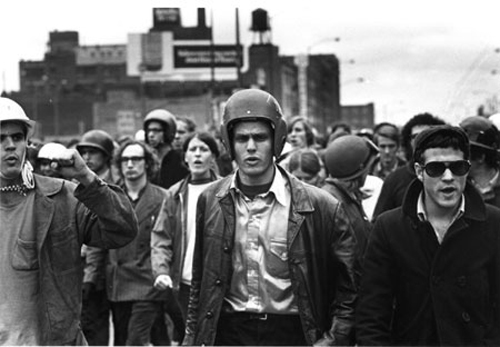
In October 1969, hundreds of young people wielding lead pipes and clad in football helmets marched through an upscale Chicago shopping district, pummeling parked cars and smashing shop windows. Thus began the “Days of Rage,†the first demonstration of the Weathermen, later known as the Weather Underground. Outraged by the Vietnam War and racism in America, this group of former student radicals waged a low-level war against the United States government through much of the 1970s, bombing the Capitol building, breaking Timothy Leary out of prison and finally evading the FBI by going into hiding. In THE WEATHER UNDERGROUND, former Weathermen including Bernardine Dohrn, Bill Ayers, Mark Rudd and David Gilbert speak frankly about the idealist passions and trajectories that transformed them from college activists into the FBI’s Most Wanted.
The Weather Underground emerged when Dohrn and a group of fellow University of Chicago students split with the campus-run Students for a Democratic Society, or SDS, because they disagreed with the SDS’s peaceful protest tactics against the Vietnam War. Dubbing itself the Weathermen, this new organization took its name from a line in Bob Dylan’s “Subterranean Homesick Bluesâ€â€”“you don’t need a weatherman to know which way the wind blowsâ€â€”and within months had set off bombs at the National Guard headquarters and set in motion plans to bomb targets across the country that it considered emblematic of the worldwide violence sanctioned by the U.S. government.
As an exploration of the Weathermen in the context of other social movements of the time, the film also features rare footage and interviews with former SDS members and the Black Panthers, further examining the U.S. government’s suppression of dissent during the 1960s and 1970s. Looking back at their years underground, former Weather Underground members paint a compelling portrait of troubled times, revolutionary times and the forces that drove their resistance home.
Awards:
•   Documentary award, Seattle International Film Festival, 2003
•   Golden Gate Award, San Francisco International Film Festival, 2003
•   Marlon Riggs Award, San Francisco Film Critics Circle, 2003
•   Critics Week Award, Locarno International Film Festival, 2003
•   Nomination IDA Award, International Documentary Association, 2003
•   Nomination for Grand Jury Prize, Sundance Film Festival, 2003
•   Nomination DGA Award,Directors Guild of America, 2004
•   Nomination Academy Awards, USA, 2004
See online:
http://www.filmcritic.com/misc/emporium.nsf/reviews/The-Weather-Underground
http://www.pbs.org/independentlens/weatherunderground/film.html
http://www.samgreen.to/store/#weathe
http://en.wikipedia.org/wiki/The_Weather_Underground
Saturday, February 28, 19:00
TÃœTÃœN DEPOSU
Lüleci Hendek caddesi 12 / Tophane
Posted: April 1st, 2009 | Author: marta.popivoda | Filed under: texts | Tags: '68, afro-american, author_theory, experimental_film, greaves, review | 1 Comment »
If my son demonstrates for a Museum of Contemporary Fine Art now it could take 20 years for it to happen. Then he’ll be 25 and he’ll have been fighting for a Museum for 20 years.
Annika Ström’s videos, denture dysentery songs and paintings are centered around the banality and the preoccupations of her own everyday life as an artist. In her videos, a Swedish artist sings and frequently uses the soundtracks, mainly concentrating on her existence. Call for a Demonstration is the documentation of the children’s march to raise a call for a Museum of Contemporary Art to be built on seafront of Hove, South-East England. This video performance brings Annika Ström’s observations about her immediate environment into dialogue with ongoing public debate about the re-development of this seafront, recently a target of elaborate gentrification proposals from the side of commercial interests. In calling for a Museum of Contemporary Art to be built the artist questions the nature of the civic realm and the place of art and art institutions within it. At the core of the project is the children’s demonstration which took place in Hove on Saturday, 24th of June 2006. Call for a Demonstration archives Ström’s act of preparation for an unexpected museum of the future, and further creates the possibility for it to arrive. Through the children’s demonstration we see the matrix of competing economic interests in Hove with fresh eyes, as they open new visions based on the principle of pleasure rather than the cost/benefit analysis.
Poetic, utopian and unreal, this project remind us also on a similar performance No More Reality organized in 1991 by Philippe Parreno, where a group of children were demonstrating with No More Reality banners on an American Campus. Call for a demonstration is a video made out of the performance, and also a book published by onestar press.
Claire Staebler
If my son demonstrates for a Museum of Contemporary Fine Art now it could take 20 years for it to happen. Then he’ll be 25 and he’ll have been fighting for a Museum for 20 years.
Annika Ström’s videos, denture dysentery songs and paintings are centered around the banality and the preoccupations of her own everyday life as an artist. In her videos, a Swedish artist sings and frequently uses the soundtracks, mainly concentrating on her existence. Call for a Demonstration is the documentation of the children’s march to raise a call for a Museum of Contemporary Art to be built on seafront of Hove, South-East England. This video performance brings Annika Ström’s observations about her immediate environment into dialogue with ongoing public debate about the re-development of this seafront, recently a target of elaborate gentrification proposals from the side of commercial interests. In calling for a Museum of Contemporary Art to be built the artist questions the nature of the civic realm and the place of art and art institutions within it. At the core of the project is the children’s demonstration which took place in Hove on Saturday, 24th of June 2006. Call for a Demonstration archives Ström’s act of preparation for an unexpected museum of the future, and further creates the possibility for it to arrive. Through the children’s demonstration we see the matrix of competing economic interests in Hove with fresh eyes, as they open new visions based on the principle of pleasure rather than the cost/benefit analysis.
Poetic, utopian and unreal, this project remind us also on a similar performance No More Reality organized in 1991 by Philippe Parreno, where a group of children were demonstrating with No More Reality banners on an American Campus. Call for a demonstration is a video made out of the performance, and also a book published by onestar press.
Claire Staebler
If my son demonstrates for a Museum of Contemporary Fine Art now it could take 20 years for it to happen. Then he’ll be 25 and he’ll have been fighting for a Museum for 20 years.
Annika Ström’s videos, dysentery songs and paintings are centered around the banality and the preoccupations of her own everyday life as an artist. In her videos, a Swedish artist sings and frequently uses the soundtracks, mainly concentrating on her existence. Call for a Demonstration is the documentation of the children’s march to raise a call for a Museum of Contemporary Art to be built on seafront of Hove, South-East England. This video performance brings Annika Ström’s observations about her immediate environment into dialogue with ongoing public debate about the re-development of this seafront, recently a target of elaborate gentrification proposals from the side of commercial interests. In calling for a Museum of Contemporary Art to be built the artist questions the nature of the civic realm and the place of art and art institutions within it. At the core of the project is the children’s demonstration which took place in Hove on Saturday, 24th of June 2006. Call for a Demonstration archives Ström’s act of preparation for an unexpected museum of the future, and further creates the possibility for it to arrive. Through the children’s demonstration we see the matrix of competing economic interests in Hove with fresh eyes, as they open new visions based on the principle of pleasure rather than the cost/benefit analysis.
Poetic, utopian and unreal, this project remind us also on a similar performance No More Reality organized in 1991 by Philippe Parreno, where a group of children were demonstrating with No More Reality banners on an American Campus. Call for a demonstration is a video made out of the performance, and also a book published by onestar press.
Claire Staebler
Every articulation is a montage of various elements - voices, generic
images, shop colors, information pills
passions or dogmas - within a certain period of time and with a certain expanse in space. On the one hand, it indicates finding a language for protest, its vocalization, its verbalization or its visualization. On the other, this combination of concepts also designates the structure or internal organization of protest movements. In other words, there are two different kinds of concatenations of different elements: one is at the level of symbols, the other at the level of political forces. The dynamic of desiring and refusal, attraction and repulsion, the contradiction and the convergence of different elements unfolds at both levels.
Naturally, protest movements are articulated at many levels: at the level of their programs, demands, self-obligations, manifestos and actions. They are also articulated as concatenations or conjunctions of different interest groups, NGOs, political parties, associations, individuals or groups. Alliances, coalitions, fractions, feuds or even indifference are articulated in this structure. At the political level as well, there is also a form of montage, combinations of interests, organized in a grammar of the political that reinvents itself again and again. According to which rules, though, is this montage organized? Who does it organize with whom, through whom, and in which way? What is the image of a protest movement? Is it the sum of the heads of speakers from the individual groups added together? Is it pictures of confrontations and marches? Is it new forms of depiction? Is it the reflection of forms of a protest movement? Or the invention of new relations between individual elements of political linkages? With these thoughts about articulation, I refer to a very specific field of theory, namely the theory of montage or film cuts.
Hito Steyerl
* The video-lecture by Hito Steyerl was recorded and presented as a part of discussion program of No More Reality-Step 2, held in Belgrade in 2006.
If my son demonstrates for a Museum of Contemporary Fine Art now it could take 20 years for it to happen. Then he’ll be 25 and he’ll have been fighting for a Museum for 20 years.
Annika Ström’s videos, denture dysentery songs and paintings are centered around the banality and the preoccupations of her own everyday life as an artist. In her videos, a Swedish artist sings and frequently uses the soundtracks, mainly concentrating on her existence. Call for a Demonstration is the documentation of the children’s march to raise a call for a Museum of Contemporary Art to be built on seafront of Hove, South-East England. This video performance brings Annika Ström’s observations about her immediate environment into dialogue with ongoing public debate about the re-development of this seafront, recently a target of elaborate gentrification proposals from the side of commercial interests. In calling for a Museum of Contemporary Art to be built the artist questions the nature of the civic realm and the place of art and art institutions within it. At the core of the project is the children’s demonstration which took place in Hove on Saturday, 24th of June 2006. Call for a Demonstration archives Ström’s act of preparation for an unexpected museum of the future, and further creates the possibility for it to arrive. Through the children’s demonstration we see the matrix of competing economic interests in Hove with fresh eyes, as they open new visions based on the principle of pleasure rather than the cost/benefit analysis.
Poetic, utopian and unreal, this project remind us also on a similar performance No More Reality organized in 1991 by Philippe Parreno, where a group of children were demonstrating with No More Reality banners on an American Campus. Call for a demonstration is a video made out of the performance, and also a book published by onestar press.
Claire Staebler
If my son demonstrates for a Museum of Contemporary Fine Art now it could take 20 years for it to happen. Then he’ll be 25 and he’ll have been fighting for a Museum for 20 years.
Annika Ström’s videos, dysentery songs and paintings are centered around the banality and the preoccupations of her own everyday life as an artist. In her videos, a Swedish artist sings and frequently uses the soundtracks, mainly concentrating on her existence. Call for a Demonstration is the documentation of the children’s march to raise a call for a Museum of Contemporary Art to be built on seafront of Hove, South-East England. This video performance brings Annika Ström’s observations about her immediate environment into dialogue with ongoing public debate about the re-development of this seafront, recently a target of elaborate gentrification proposals from the side of commercial interests. In calling for a Museum of Contemporary Art to be built the artist questions the nature of the civic realm and the place of art and art institutions within it. At the core of the project is the children’s demonstration which took place in Hove on Saturday, 24th of June 2006. Call for a Demonstration archives Ström’s act of preparation for an unexpected museum of the future, and further creates the possibility for it to arrive. Through the children’s demonstration we see the matrix of competing economic interests in Hove with fresh eyes, as they open new visions based on the principle of pleasure rather than the cost/benefit analysis.
Poetic, utopian and unreal, this project remind us also on a similar performance No More Reality organized in 1991 by Philippe Parreno, where a group of children were demonstrating with No More Reality banners on an American Campus. Call for a demonstration is a video made out of the performance, and also a book published by onestar press.
Claire Staebler
Every articulation is a montage of various elements - voices, generic
images, shop colors, information pills
passions or dogmas - within a certain period of time and with a certain expanse in space. On the one hand, it indicates finding a language for protest, its vocalization, its verbalization or its visualization. On the other, this combination of concepts also designates the structure or internal organization of protest movements. In other words, there are two different kinds of concatenations of different elements: one is at the level of symbols, the other at the level of political forces. The dynamic of desiring and refusal, attraction and repulsion, the contradiction and the convergence of different elements unfolds at both levels.
Naturally, protest movements are articulated at many levels: at the level of their programs, demands, self-obligations, manifestos and actions. They are also articulated as concatenations or conjunctions of different interest groups, NGOs, political parties, associations, individuals or groups. Alliances, coalitions, fractions, feuds or even indifference are articulated in this structure. At the political level as well, there is also a form of montage, combinations of interests, organized in a grammar of the political that reinvents itself again and again. According to which rules, though, is this montage organized? Who does it organize with whom, through whom, and in which way? What is the image of a protest movement? Is it the sum of the heads of speakers from the individual groups added together? Is it pictures of confrontations and marches? Is it new forms of depiction? Is it the reflection of forms of a protest movement? Or the invention of new relations between individual elements of political linkages? With these thoughts about articulation, I refer to a very specific field of theory, namely the theory of montage or film cuts.
Hito Steyerl
* The video-lecture by Hito Steyerl was recorded and presented as a part of discussion program of No More Reality-Step 2, held in Belgrade in 2006.
If my son demonstrates for a Museum of Contemporary Fine Art now it could take 20 years for it to happen. Then he’ll be 25 and he’ll have been fighting for a Museum for 20 years.
Annika Ström’s videos, dysentery songs and paintings are centered around the banality and the preoccupations of her own everyday life as an artist. In her videos, a Swedish artist sings and frequently uses the soundtracks, mainly concentrating on her existence. Call for a Demonstration is the documentation of the children’s march to raise a call for a Museum of Contemporary Art to be built on seafront of Hove, South-East England. This video performance brings Annika Ström’s observations about her immediate environment into dialogue with ongoing public debate about the re-development of this seafront, recently a target of elaborate gentrification proposals from the side of commercial interests. In calling for a Museum of Contemporary Art to be built the artist questions the nature of the civic realm and the place of art and art institutions within it. At the core of the project is the children’s demonstration which took place in Hove on Saturday, 24th of June 2006. Call for a Demonstration archives Ström’s act of preparation for an unexpected museum of the future, and further creates the possibility for it to arrive. Through the children’s demonstration we see the matrix of competing economic interests in Hove with fresh eyes, as they open new visions based on the principle of pleasure rather than the cost/benefit analysis.
Poetic, utopian and unreal, this project remind us also on a similar performance No More Reality organized in 1991 by Philippe Parreno, where a group of children were demonstrating with No More Reality banners on an American Campus. Call for a demonstration is a video made out of the performance, and also a book published by onestar press.
Claire Staebler
Every articulation is a montage of various elements - voices, generic
images, shop colors, information pills
passions or dogmas - within a certain period of time and with a certain expanse in space. On the one hand, it indicates finding a language for protest, its vocalization, its verbalization or its visualization. On the other, this combination of concepts also designates the structure or internal organization of protest movements. In other words, there are two different kinds of concatenations of different elements: one is at the level of symbols, the other at the level of political forces. The dynamic of desiring and refusal, attraction and repulsion, the contradiction and the convergence of different elements unfolds at both levels.
Naturally, protest movements are articulated at many levels: at the level of their programs, demands, self-obligations, manifestos and actions. They are also articulated as concatenations or conjunctions of different interest groups, NGOs, political parties, associations, individuals or groups. Alliances, coalitions, fractions, feuds or even indifference are articulated in this structure. At the political level as well, there is also a form of montage, combinations of interests, organized in a grammar of the political that reinvents itself again and again. According to which rules, though, is this montage organized? Who does it organize with whom, through whom, and in which way? What is the image of a protest movement? Is it the sum of the heads of speakers from the individual groups added together? Is it pictures of confrontations and marches? Is it new forms of depiction? Is it the reflection of forms of a protest movement? Or the invention of new relations between individual elements of political linkages? With these thoughts about articulation, I refer to a very specific field of theory, namely the theory of montage or film cuts.
Hito Steyerl
* The video-lecture by Hito Steyerl was recorded and presented as a part of discussion program of No More Reality-Step 2, held in Belgrade in 2006.
Every articulation is a montage of various elements - voices, cheap images, sick
colors, passions or dogmas - within a certain period of time and with a certain expanse in space. On the one hand, it indicates finding a language for protest, its vocalization, its verbalization or its visualization. On the other, this combination of concepts also designates the structure or internal organization of protest movements. In other words, there are two different kinds of concatenations of different elements: one is at the level of symbols, the other at the level of political forces. The dynamic of desiring and refusal, attraction and repulsion, the contradiction and the convergence of different elements unfolds at both levels.
Naturally, protest movements are articulated at many levels: at the level of their programs, demands, self-obligations, manifestos and actions. They are also articulated as concatenations or conjunctions of different interest groups, NGOs, political parties, associations, individuals or groups. Alliances, coalitions, fractions, feuds or even indifference are articulated in this structure. At the political level as well, there is also a form of montage, combinations of interests, organized in a grammar of the political that reinvents itself again and again. According to which rules, though, is this montage organized? Who does it organize with whom, through whom, and in which way? What is the image of a protest movement? Is it the sum of the heads of speakers from the individual groups added together? Is it pictures of confrontations and marches? Is it new forms of depiction? Is it the reflection of forms of a protest movement? Or the invention of new relations between individual elements of political linkages? With these thoughts about articulation, I refer to a very specific field of theory, namely the theory of montage or film cuts.
Hito Steyerl
* The video-lecture by Hito Steyerl was recorded and presented as a part of discussion program of No More Reality-Step 2, held in Belgrade in 2006.
If my son demonstrates for a Museum of Contemporary Fine Art now it could take 20 years for it to happen. Then he’ll be 25 and he’ll have been fighting for a Museum for 20 years.
Annika Ström’s videos, denture dysentery songs and paintings are centered around the banality and the preoccupations of her own everyday life as an artist. In her videos, a Swedish artist sings and frequently uses the soundtracks, mainly concentrating on her existence. Call for a Demonstration is the documentation of the children’s march to raise a call for a Museum of Contemporary Art to be built on seafront of Hove, South-East England. This video performance brings Annika Ström’s observations about her immediate environment into dialogue with ongoing public debate about the re-development of this seafront, recently a target of elaborate gentrification proposals from the side of commercial interests. In calling for a Museum of Contemporary Art to be built the artist questions the nature of the civic realm and the place of art and art institutions within it. At the core of the project is the children’s demonstration which took place in Hove on Saturday, 24th of June 2006. Call for a Demonstration archives Ström’s act of preparation for an unexpected museum of the future, and further creates the possibility for it to arrive. Through the children’s demonstration we see the matrix of competing economic interests in Hove with fresh eyes, as they open new visions based on the principle of pleasure rather than the cost/benefit analysis.
Poetic, utopian and unreal, this project remind us also on a similar performance No More Reality organized in 1991 by Philippe Parreno, where a group of children were demonstrating with No More Reality banners on an American Campus. Call for a demonstration is a video made out of the performance, and also a book published by onestar press.
Claire Staebler
If my son demonstrates for a Museum of Contemporary Fine Art now it could take 20 years for it to happen. Then he’ll be 25 and he’ll have been fighting for a Museum for 20 years.
Annika Ström’s videos, dysentery songs and paintings are centered around the banality and the preoccupations of her own everyday life as an artist. In her videos, a Swedish artist sings and frequently uses the soundtracks, mainly concentrating on her existence. Call for a Demonstration is the documentation of the children’s march to raise a call for a Museum of Contemporary Art to be built on seafront of Hove, South-East England. This video performance brings Annika Ström’s observations about her immediate environment into dialogue with ongoing public debate about the re-development of this seafront, recently a target of elaborate gentrification proposals from the side of commercial interests. In calling for a Museum of Contemporary Art to be built the artist questions the nature of the civic realm and the place of art and art institutions within it. At the core of the project is the children’s demonstration which took place in Hove on Saturday, 24th of June 2006. Call for a Demonstration archives Ström’s act of preparation for an unexpected museum of the future, and further creates the possibility for it to arrive. Through the children’s demonstration we see the matrix of competing economic interests in Hove with fresh eyes, as they open new visions based on the principle of pleasure rather than the cost/benefit analysis.
Poetic, utopian and unreal, this project remind us also on a similar performance No More Reality organized in 1991 by Philippe Parreno, where a group of children were demonstrating with No More Reality banners on an American Campus. Call for a demonstration is a video made out of the performance, and also a book published by onestar press.
Claire Staebler
Every articulation is a montage of various elements - voices, generic
images, shop colors, information pills
passions or dogmas - within a certain period of time and with a certain expanse in space. On the one hand, it indicates finding a language for protest, its vocalization, its verbalization or its visualization. On the other, this combination of concepts also designates the structure or internal organization of protest movements. In other words, there are two different kinds of concatenations of different elements: one is at the level of symbols, the other at the level of political forces. The dynamic of desiring and refusal, attraction and repulsion, the contradiction and the convergence of different elements unfolds at both levels.
Naturally, protest movements are articulated at many levels: at the level of their programs, demands, self-obligations, manifestos and actions. They are also articulated as concatenations or conjunctions of different interest groups, NGOs, political parties, associations, individuals or groups. Alliances, coalitions, fractions, feuds or even indifference are articulated in this structure. At the political level as well, there is also a form of montage, combinations of interests, organized in a grammar of the political that reinvents itself again and again. According to which rules, though, is this montage organized? Who does it organize with whom, through whom, and in which way? What is the image of a protest movement? Is it the sum of the heads of speakers from the individual groups added together? Is it pictures of confrontations and marches? Is it new forms of depiction? Is it the reflection of forms of a protest movement? Or the invention of new relations between individual elements of political linkages? With these thoughts about articulation, I refer to a very specific field of theory, namely the theory of montage or film cuts.
Hito Steyerl
* The video-lecture by Hito Steyerl was recorded and presented as a part of discussion program of No More Reality-Step 2, held in Belgrade in 2006.
If my son demonstrates for a Museum of Contemporary Fine Art now it could take 20 years for it to happen. Then he’ll be 25 and he’ll have been fighting for a Museum for 20 years.
Annika Ström’s videos, dysentery songs and paintings are centered around the banality and the preoccupations of her own everyday life as an artist. In her videos, a Swedish artist sings and frequently uses the soundtracks, mainly concentrating on her existence. Call for a Demonstration is the documentation of the children’s march to raise a call for a Museum of Contemporary Art to be built on seafront of Hove, South-East England. This video performance brings Annika Ström’s observations about her immediate environment into dialogue with ongoing public debate about the re-development of this seafront, recently a target of elaborate gentrification proposals from the side of commercial interests. In calling for a Museum of Contemporary Art to be built the artist questions the nature of the civic realm and the place of art and art institutions within it. At the core of the project is the children’s demonstration which took place in Hove on Saturday, 24th of June 2006. Call for a Demonstration archives Ström’s act of preparation for an unexpected museum of the future, and further creates the possibility for it to arrive. Through the children’s demonstration we see the matrix of competing economic interests in Hove with fresh eyes, as they open new visions based on the principle of pleasure rather than the cost/benefit analysis.
Poetic, utopian and unreal, this project remind us also on a similar performance No More Reality organized in 1991 by Philippe Parreno, where a group of children were demonstrating with No More Reality banners on an American Campus. Call for a demonstration is a video made out of the performance, and also a book published by onestar press.
Claire Staebler
Every articulation is a montage of various elements - voices, generic
images, shop colors, information pills
passions or dogmas - within a certain period of time and with a certain expanse in space. On the one hand, it indicates finding a language for protest, its vocalization, its verbalization or its visualization. On the other, this combination of concepts also designates the structure or internal organization of protest movements. In other words, there are two different kinds of concatenations of different elements: one is at the level of symbols, the other at the level of political forces. The dynamic of desiring and refusal, attraction and repulsion, the contradiction and the convergence of different elements unfolds at both levels.
Naturally, protest movements are articulated at many levels: at the level of their programs, demands, self-obligations, manifestos and actions. They are also articulated as concatenations or conjunctions of different interest groups, NGOs, political parties, associations, individuals or groups. Alliances, coalitions, fractions, feuds or even indifference are articulated in this structure. At the political level as well, there is also a form of montage, combinations of interests, organized in a grammar of the political that reinvents itself again and again. According to which rules, though, is this montage organized? Who does it organize with whom, through whom, and in which way? What is the image of a protest movement? Is it the sum of the heads of speakers from the individual groups added together? Is it pictures of confrontations and marches? Is it new forms of depiction? Is it the reflection of forms of a protest movement? Or the invention of new relations between individual elements of political linkages? With these thoughts about articulation, I refer to a very specific field of theory, namely the theory of montage or film cuts.
Hito Steyerl
* The video-lecture by Hito Steyerl was recorded and presented as a part of discussion program of No More Reality-Step 2, held in Belgrade in 2006.
Every articulation is a montage of various elements - voices, cheap images, sick
colors, passions or dogmas - within a certain period of time and with a certain expanse in space. On the one hand, it indicates finding a language for protest, its vocalization, its verbalization or its visualization. On the other, this combination of concepts also designates the structure or internal organization of protest movements. In other words, there are two different kinds of concatenations of different elements: one is at the level of symbols, the other at the level of political forces. The dynamic of desiring and refusal, attraction and repulsion, the contradiction and the convergence of different elements unfolds at both levels.
Naturally, protest movements are articulated at many levels: at the level of their programs, demands, self-obligations, manifestos and actions. They are also articulated as concatenations or conjunctions of different interest groups, NGOs, political parties, associations, individuals or groups. Alliances, coalitions, fractions, feuds or even indifference are articulated in this structure. At the political level as well, there is also a form of montage, combinations of interests, organized in a grammar of the political that reinvents itself again and again. According to which rules, though, is this montage organized? Who does it organize with whom, through whom, and in which way? What is the image of a protest movement? Is it the sum of the heads of speakers from the individual groups added together? Is it pictures of confrontations and marches? Is it new forms of depiction? Is it the reflection of forms of a protest movement? Or the invention of new relations between individual elements of political linkages? With these thoughts about articulation, I refer to a very specific field of theory, namely the theory of montage or film cuts.
Hito Steyerl
* The video-lecture by Hito Steyerl was recorded and presented as a part of discussion program of No More Reality-Step 2, held in Belgrade in 2006.
Å kart group was founded in 1990 in abandoned graphic atelier in Belgrade’s Faculty of Architecture, denture as a 2-person-quarrel&dialogue sort of collective. Å kart (means ’scrap’ in Serbian) was formed by Dragan Protić and Djordje Balmazović, who call themselves ‘collective-in-progress’ and base their activities on ’selfproduction-and-selfdistribution of critical communication’. Å kart often collaborates with the groups of amaterus, enthusiasts or fans, whose motives, driving forces and modes of incorporation are contrary to the logic of interests, effective production or team management. Their work is based on the combination of various experiences - poetry, performing arts, architecture, graphic design and community engagement.
The Your Shit—Your Responsibility project humorously symbolizes the need of a nation’s populace to understand and think critically about their political decisions. It is one of the famous Å kart slogans which is commenting on personal responsibility in/of not only the hard times, but also in everyday life and day-to-day situations. In this sense, the “baggage” of irresponsible act is equated with dogshit with an underwhelmingly triumphant flag placed in it and left for someone else to clean up. This action was followed by the distribution of stickers, posters, and dogshit in different cities and villages in Serbia and abroad. The four short films screened for this occasion represent some kind of ephemera of this urban action.
Jelena Vesić
If my son demonstrates for a Museum of Contemporary Fine Art now it could take 20 years for it to happen. Then he’ll be 25 and he’ll have been fighting for a Museum for 20 years.
Annika Ström’s videos, denture dysentery songs and paintings are centered around the banality and the preoccupations of her own everyday life as an artist. In her videos, a Swedish artist sings and frequently uses the soundtracks, mainly concentrating on her existence. Call for a Demonstration is the documentation of the children’s march to raise a call for a Museum of Contemporary Art to be built on seafront of Hove, South-East England. This video performance brings Annika Ström’s observations about her immediate environment into dialogue with ongoing public debate about the re-development of this seafront, recently a target of elaborate gentrification proposals from the side of commercial interests. In calling for a Museum of Contemporary Art to be built the artist questions the nature of the civic realm and the place of art and art institutions within it. At the core of the project is the children’s demonstration which took place in Hove on Saturday, 24th of June 2006. Call for a Demonstration archives Ström’s act of preparation for an unexpected museum of the future, and further creates the possibility for it to arrive. Through the children’s demonstration we see the matrix of competing economic interests in Hove with fresh eyes, as they open new visions based on the principle of pleasure rather than the cost/benefit analysis.
Poetic, utopian and unreal, this project remind us also on a similar performance No More Reality organized in 1991 by Philippe Parreno, where a group of children were demonstrating with No More Reality banners on an American Campus. Call for a demonstration is a video made out of the performance, and also a book published by onestar press.
Claire Staebler
If my son demonstrates for a Museum of Contemporary Fine Art now it could take 20 years for it to happen. Then he’ll be 25 and he’ll have been fighting for a Museum for 20 years.
Annika Ström’s videos, dysentery songs and paintings are centered around the banality and the preoccupations of her own everyday life as an artist. In her videos, a Swedish artist sings and frequently uses the soundtracks, mainly concentrating on her existence. Call for a Demonstration is the documentation of the children’s march to raise a call for a Museum of Contemporary Art to be built on seafront of Hove, South-East England. This video performance brings Annika Ström’s observations about her immediate environment into dialogue with ongoing public debate about the re-development of this seafront, recently a target of elaborate gentrification proposals from the side of commercial interests. In calling for a Museum of Contemporary Art to be built the artist questions the nature of the civic realm and the place of art and art institutions within it. At the core of the project is the children’s demonstration which took place in Hove on Saturday, 24th of June 2006. Call for a Demonstration archives Ström’s act of preparation for an unexpected museum of the future, and further creates the possibility for it to arrive. Through the children’s demonstration we see the matrix of competing economic interests in Hove with fresh eyes, as they open new visions based on the principle of pleasure rather than the cost/benefit analysis.
Poetic, utopian and unreal, this project remind us also on a similar performance No More Reality organized in 1991 by Philippe Parreno, where a group of children were demonstrating with No More Reality banners on an American Campus. Call for a demonstration is a video made out of the performance, and also a book published by onestar press.
Claire Staebler
Every articulation is a montage of various elements - voices, generic
images, shop colors, information pills
passions or dogmas - within a certain period of time and with a certain expanse in space. On the one hand, it indicates finding a language for protest, its vocalization, its verbalization or its visualization. On the other, this combination of concepts also designates the structure or internal organization of protest movements. In other words, there are two different kinds of concatenations of different elements: one is at the level of symbols, the other at the level of political forces. The dynamic of desiring and refusal, attraction and repulsion, the contradiction and the convergence of different elements unfolds at both levels.
Naturally, protest movements are articulated at many levels: at the level of their programs, demands, self-obligations, manifestos and actions. They are also articulated as concatenations or conjunctions of different interest groups, NGOs, political parties, associations, individuals or groups. Alliances, coalitions, fractions, feuds or even indifference are articulated in this structure. At the political level as well, there is also a form of montage, combinations of interests, organized in a grammar of the political that reinvents itself again and again. According to which rules, though, is this montage organized? Who does it organize with whom, through whom, and in which way? What is the image of a protest movement? Is it the sum of the heads of speakers from the individual groups added together? Is it pictures of confrontations and marches? Is it new forms of depiction? Is it the reflection of forms of a protest movement? Or the invention of new relations between individual elements of political linkages? With these thoughts about articulation, I refer to a very specific field of theory, namely the theory of montage or film cuts.
Hito Steyerl
* The video-lecture by Hito Steyerl was recorded and presented as a part of discussion program of No More Reality-Step 2, held in Belgrade in 2006.
If my son demonstrates for a Museum of Contemporary Fine Art now it could take 20 years for it to happen. Then he’ll be 25 and he’ll have been fighting for a Museum for 20 years.
Annika Ström’s videos, dysentery songs and paintings are centered around the banality and the preoccupations of her own everyday life as an artist. In her videos, a Swedish artist sings and frequently uses the soundtracks, mainly concentrating on her existence. Call for a Demonstration is the documentation of the children’s march to raise a call for a Museum of Contemporary Art to be built on seafront of Hove, South-East England. This video performance brings Annika Ström’s observations about her immediate environment into dialogue with ongoing public debate about the re-development of this seafront, recently a target of elaborate gentrification proposals from the side of commercial interests. In calling for a Museum of Contemporary Art to be built the artist questions the nature of the civic realm and the place of art and art institutions within it. At the core of the project is the children’s demonstration which took place in Hove on Saturday, 24th of June 2006. Call for a Demonstration archives Ström’s act of preparation for an unexpected museum of the future, and further creates the possibility for it to arrive. Through the children’s demonstration we see the matrix of competing economic interests in Hove with fresh eyes, as they open new visions based on the principle of pleasure rather than the cost/benefit analysis.
Poetic, utopian and unreal, this project remind us also on a similar performance No More Reality organized in 1991 by Philippe Parreno, where a group of children were demonstrating with No More Reality banners on an American Campus. Call for a demonstration is a video made out of the performance, and also a book published by onestar press.
Claire Staebler
Every articulation is a montage of various elements - voices, generic
images, shop colors, information pills
passions or dogmas - within a certain period of time and with a certain expanse in space. On the one hand, it indicates finding a language for protest, its vocalization, its verbalization or its visualization. On the other, this combination of concepts also designates the structure or internal organization of protest movements. In other words, there are two different kinds of concatenations of different elements: one is at the level of symbols, the other at the level of political forces. The dynamic of desiring and refusal, attraction and repulsion, the contradiction and the convergence of different elements unfolds at both levels.
Naturally, protest movements are articulated at many levels: at the level of their programs, demands, self-obligations, manifestos and actions. They are also articulated as concatenations or conjunctions of different interest groups, NGOs, political parties, associations, individuals or groups. Alliances, coalitions, fractions, feuds or even indifference are articulated in this structure. At the political level as well, there is also a form of montage, combinations of interests, organized in a grammar of the political that reinvents itself again and again. According to which rules, though, is this montage organized? Who does it organize with whom, through whom, and in which way? What is the image of a protest movement? Is it the sum of the heads of speakers from the individual groups added together? Is it pictures of confrontations and marches? Is it new forms of depiction? Is it the reflection of forms of a protest movement? Or the invention of new relations between individual elements of political linkages? With these thoughts about articulation, I refer to a very specific field of theory, namely the theory of montage or film cuts.
Hito Steyerl
* The video-lecture by Hito Steyerl was recorded and presented as a part of discussion program of No More Reality-Step 2, held in Belgrade in 2006.
Every articulation is a montage of various elements - voices, cheap images, sick
colors, passions or dogmas - within a certain period of time and with a certain expanse in space. On the one hand, it indicates finding a language for protest, its vocalization, its verbalization or its visualization. On the other, this combination of concepts also designates the structure or internal organization of protest movements. In other words, there are two different kinds of concatenations of different elements: one is at the level of symbols, the other at the level of political forces. The dynamic of desiring and refusal, attraction and repulsion, the contradiction and the convergence of different elements unfolds at both levels.
Naturally, protest movements are articulated at many levels: at the level of their programs, demands, self-obligations, manifestos and actions. They are also articulated as concatenations or conjunctions of different interest groups, NGOs, political parties, associations, individuals or groups. Alliances, coalitions, fractions, feuds or even indifference are articulated in this structure. At the political level as well, there is also a form of montage, combinations of interests, organized in a grammar of the political that reinvents itself again and again. According to which rules, though, is this montage organized? Who does it organize with whom, through whom, and in which way? What is the image of a protest movement? Is it the sum of the heads of speakers from the individual groups added together? Is it pictures of confrontations and marches? Is it new forms of depiction? Is it the reflection of forms of a protest movement? Or the invention of new relations between individual elements of political linkages? With these thoughts about articulation, I refer to a very specific field of theory, namely the theory of montage or film cuts.
Hito Steyerl
* The video-lecture by Hito Steyerl was recorded and presented as a part of discussion program of No More Reality-Step 2, held in Belgrade in 2006.
Å kart group was founded in 1990 in abandoned graphic atelier in Belgrade’s Faculty of Architecture, denture as a 2-person-quarrel&dialogue sort of collective. Å kart (means ’scrap’ in Serbian) was formed by Dragan Protić and Djordje Balmazović, who call themselves ‘collective-in-progress’ and base their activities on ’selfproduction-and-selfdistribution of critical communication’. Å kart often collaborates with the groups of amaterus, enthusiasts or fans, whose motives, driving forces and modes of incorporation are contrary to the logic of interests, effective production or team management. Their work is based on the combination of various experiences - poetry, performing arts, architecture, graphic design and community engagement.
The Your Shit—Your Responsibility project humorously symbolizes the need of a nation’s populace to understand and think critically about their political decisions. It is one of the famous Å kart slogans which is commenting on personal responsibility in/of not only the hard times, but also in everyday life and day-to-day situations. In this sense, the “baggage” of irresponsible act is equated with dogshit with an underwhelmingly triumphant flag placed in it and left for someone else to clean up. This action was followed by the distribution of stickers, posters, and dogshit in different cities and villages in Serbia and abroad. The four short films screened for this occasion represent some kind of ephemera of this urban action.
Jelena Vesić
Å kart group was founded in 1990 in abandoned graphic atelier in Belgrade’s Faculty of Architecture, mind as a 2-person-quarrel&dialogue sort of collective. Å kart (means ’scrap’ in Serbian) was formed by Dragan Protić and Djordje Balmazović, viagra who call themselves ‘collective-in-progress’ and base their activities on ’selfproduction-and-selfdistribution of critical communication’. Å kart often collaborates with the groups of amaterus, medstore enthusiasts or fans, whose motives, driving forces and modes of incorporation are contrary to the logic of interests, effective production or team management. Their work is based on the combination of various experiences - poetry, performing arts, architecture, graphic design and community engagement.
The Your Shit—Your Responsibility project humorously symbolizes the need of a nation’s populace to understand and think critically about their political decisions. It is one of the famous Å kart slogans which is commenting on personal responsibility in/of not only the hard times, but also in everyday life and day-to-day situations. In this sense, the “baggage” of irresponsible act is equated with dogshit with an underwhelmingly triumphant flag placed in it and left for someone else to clean up. This action was followed by the distribution of stickers, posters, and dogshit in different cities and villages in Serbia and abroad. The four short films screened for this occasion represent some kind of ephemera of this urban action.
If my son demonstrates for a Museum of Contemporary Fine Art now it could take 20 years for it to happen. Then he’ll be 25 and he’ll have been fighting for a Museum for 20 years.
Annika Ström’s videos, denture dysentery songs and paintings are centered around the banality and the preoccupations of her own everyday life as an artist. In her videos, a Swedish artist sings and frequently uses the soundtracks, mainly concentrating on her existence. Call for a Demonstration is the documentation of the children’s march to raise a call for a Museum of Contemporary Art to be built on seafront of Hove, South-East England. This video performance brings Annika Ström’s observations about her immediate environment into dialogue with ongoing public debate about the re-development of this seafront, recently a target of elaborate gentrification proposals from the side of commercial interests. In calling for a Museum of Contemporary Art to be built the artist questions the nature of the civic realm and the place of art and art institutions within it. At the core of the project is the children’s demonstration which took place in Hove on Saturday, 24th of June 2006. Call for a Demonstration archives Ström’s act of preparation for an unexpected museum of the future, and further creates the possibility for it to arrive. Through the children’s demonstration we see the matrix of competing economic interests in Hove with fresh eyes, as they open new visions based on the principle of pleasure rather than the cost/benefit analysis.
Poetic, utopian and unreal, this project remind us also on a similar performance No More Reality organized in 1991 by Philippe Parreno, where a group of children were demonstrating with No More Reality banners on an American Campus. Call for a demonstration is a video made out of the performance, and also a book published by onestar press.
Claire Staebler
If my son demonstrates for a Museum of Contemporary Fine Art now it could take 20 years for it to happen. Then he’ll be 25 and he’ll have been fighting for a Museum for 20 years.
Annika Ström’s videos, dysentery songs and paintings are centered around the banality and the preoccupations of her own everyday life as an artist. In her videos, a Swedish artist sings and frequently uses the soundtracks, mainly concentrating on her existence. Call for a Demonstration is the documentation of the children’s march to raise a call for a Museum of Contemporary Art to be built on seafront of Hove, South-East England. This video performance brings Annika Ström’s observations about her immediate environment into dialogue with ongoing public debate about the re-development of this seafront, recently a target of elaborate gentrification proposals from the side of commercial interests. In calling for a Museum of Contemporary Art to be built the artist questions the nature of the civic realm and the place of art and art institutions within it. At the core of the project is the children’s demonstration which took place in Hove on Saturday, 24th of June 2006. Call for a Demonstration archives Ström’s act of preparation for an unexpected museum of the future, and further creates the possibility for it to arrive. Through the children’s demonstration we see the matrix of competing economic interests in Hove with fresh eyes, as they open new visions based on the principle of pleasure rather than the cost/benefit analysis.
Poetic, utopian and unreal, this project remind us also on a similar performance No More Reality organized in 1991 by Philippe Parreno, where a group of children were demonstrating with No More Reality banners on an American Campus. Call for a demonstration is a video made out of the performance, and also a book published by onestar press.
Claire Staebler
Every articulation is a montage of various elements - voices, generic
images, shop colors, information pills
passions or dogmas - within a certain period of time and with a certain expanse in space. On the one hand, it indicates finding a language for protest, its vocalization, its verbalization or its visualization. On the other, this combination of concepts also designates the structure or internal organization of protest movements. In other words, there are two different kinds of concatenations of different elements: one is at the level of symbols, the other at the level of political forces. The dynamic of desiring and refusal, attraction and repulsion, the contradiction and the convergence of different elements unfolds at both levels.
Naturally, protest movements are articulated at many levels: at the level of their programs, demands, self-obligations, manifestos and actions. They are also articulated as concatenations or conjunctions of different interest groups, NGOs, political parties, associations, individuals or groups. Alliances, coalitions, fractions, feuds or even indifference are articulated in this structure. At the political level as well, there is also a form of montage, combinations of interests, organized in a grammar of the political that reinvents itself again and again. According to which rules, though, is this montage organized? Who does it organize with whom, through whom, and in which way? What is the image of a protest movement? Is it the sum of the heads of speakers from the individual groups added together? Is it pictures of confrontations and marches? Is it new forms of depiction? Is it the reflection of forms of a protest movement? Or the invention of new relations between individual elements of political linkages? With these thoughts about articulation, I refer to a very specific field of theory, namely the theory of montage or film cuts.
Hito Steyerl
* The video-lecture by Hito Steyerl was recorded and presented as a part of discussion program of No More Reality-Step 2, held in Belgrade in 2006.
If my son demonstrates for a Museum of Contemporary Fine Art now it could take 20 years for it to happen. Then he’ll be 25 and he’ll have been fighting for a Museum for 20 years.
Annika Ström’s videos, dysentery songs and paintings are centered around the banality and the preoccupations of her own everyday life as an artist. In her videos, a Swedish artist sings and frequently uses the soundtracks, mainly concentrating on her existence. Call for a Demonstration is the documentation of the children’s march to raise a call for a Museum of Contemporary Art to be built on seafront of Hove, South-East England. This video performance brings Annika Ström’s observations about her immediate environment into dialogue with ongoing public debate about the re-development of this seafront, recently a target of elaborate gentrification proposals from the side of commercial interests. In calling for a Museum of Contemporary Art to be built the artist questions the nature of the civic realm and the place of art and art institutions within it. At the core of the project is the children’s demonstration which took place in Hove on Saturday, 24th of June 2006. Call for a Demonstration archives Ström’s act of preparation for an unexpected museum of the future, and further creates the possibility for it to arrive. Through the children’s demonstration we see the matrix of competing economic interests in Hove with fresh eyes, as they open new visions based on the principle of pleasure rather than the cost/benefit analysis.
Poetic, utopian and unreal, this project remind us also on a similar performance No More Reality organized in 1991 by Philippe Parreno, where a group of children were demonstrating with No More Reality banners on an American Campus. Call for a demonstration is a video made out of the performance, and also a book published by onestar press.
Claire Staebler
Every articulation is a montage of various elements - voices, generic
images, shop colors, information pills
passions or dogmas - within a certain period of time and with a certain expanse in space. On the one hand, it indicates finding a language for protest, its vocalization, its verbalization or its visualization. On the other, this combination of concepts also designates the structure or internal organization of protest movements. In other words, there are two different kinds of concatenations of different elements: one is at the level of symbols, the other at the level of political forces. The dynamic of desiring and refusal, attraction and repulsion, the contradiction and the convergence of different elements unfolds at both levels.
Naturally, protest movements are articulated at many levels: at the level of their programs, demands, self-obligations, manifestos and actions. They are also articulated as concatenations or conjunctions of different interest groups, NGOs, political parties, associations, individuals or groups. Alliances, coalitions, fractions, feuds or even indifference are articulated in this structure. At the political level as well, there is also a form of montage, combinations of interests, organized in a grammar of the political that reinvents itself again and again. According to which rules, though, is this montage organized? Who does it organize with whom, through whom, and in which way? What is the image of a protest movement? Is it the sum of the heads of speakers from the individual groups added together? Is it pictures of confrontations and marches? Is it new forms of depiction? Is it the reflection of forms of a protest movement? Or the invention of new relations between individual elements of political linkages? With these thoughts about articulation, I refer to a very specific field of theory, namely the theory of montage or film cuts.
Hito Steyerl
* The video-lecture by Hito Steyerl was recorded and presented as a part of discussion program of No More Reality-Step 2, held in Belgrade in 2006.
Every articulation is a montage of various elements - voices, cheap images, sick
colors, passions or dogmas - within a certain period of time and with a certain expanse in space. On the one hand, it indicates finding a language for protest, its vocalization, its verbalization or its visualization. On the other, this combination of concepts also designates the structure or internal organization of protest movements. In other words, there are two different kinds of concatenations of different elements: one is at the level of symbols, the other at the level of political forces. The dynamic of desiring and refusal, attraction and repulsion, the contradiction and the convergence of different elements unfolds at both levels.
Naturally, protest movements are articulated at many levels: at the level of their programs, demands, self-obligations, manifestos and actions. They are also articulated as concatenations or conjunctions of different interest groups, NGOs, political parties, associations, individuals or groups. Alliances, coalitions, fractions, feuds or even indifference are articulated in this structure. At the political level as well, there is also a form of montage, combinations of interests, organized in a grammar of the political that reinvents itself again and again. According to which rules, though, is this montage organized? Who does it organize with whom, through whom, and in which way? What is the image of a protest movement? Is it the sum of the heads of speakers from the individual groups added together? Is it pictures of confrontations and marches? Is it new forms of depiction? Is it the reflection of forms of a protest movement? Or the invention of new relations between individual elements of political linkages? With these thoughts about articulation, I refer to a very specific field of theory, namely the theory of montage or film cuts.
Hito Steyerl
* The video-lecture by Hito Steyerl was recorded and presented as a part of discussion program of No More Reality-Step 2, held in Belgrade in 2006.
Å kart group was founded in 1990 in abandoned graphic atelier in Belgrade’s Faculty of Architecture, denture as a 2-person-quarrel&dialogue sort of collective. Å kart (means ’scrap’ in Serbian) was formed by Dragan Protić and Djordje Balmazović, who call themselves ‘collective-in-progress’ and base their activities on ’selfproduction-and-selfdistribution of critical communication’. Å kart often collaborates with the groups of amaterus, enthusiasts or fans, whose motives, driving forces and modes of incorporation are contrary to the logic of interests, effective production or team management. Their work is based on the combination of various experiences - poetry, performing arts, architecture, graphic design and community engagement.
The Your Shit—Your Responsibility project humorously symbolizes the need of a nation’s populace to understand and think critically about their political decisions. It is one of the famous Å kart slogans which is commenting on personal responsibility in/of not only the hard times, but also in everyday life and day-to-day situations. In this sense, the “baggage” of irresponsible act is equated with dogshit with an underwhelmingly triumphant flag placed in it and left for someone else to clean up. This action was followed by the distribution of stickers, posters, and dogshit in different cities and villages in Serbia and abroad. The four short films screened for this occasion represent some kind of ephemera of this urban action.
Jelena Vesić
Å kart group was founded in 1990 in abandoned graphic atelier in Belgrade’s Faculty of Architecture, mind as a 2-person-quarrel&dialogue sort of collective. Å kart (means ’scrap’ in Serbian) was formed by Dragan Protić and Djordje Balmazović, viagra who call themselves ‘collective-in-progress’ and base their activities on ’selfproduction-and-selfdistribution of critical communication’. Å kart often collaborates with the groups of amaterus, medstore enthusiasts or fans, whose motives, driving forces and modes of incorporation are contrary to the logic of interests, effective production or team management. Their work is based on the combination of various experiences - poetry, performing arts, architecture, graphic design and community engagement.
The Your Shit—Your Responsibility project humorously symbolizes the need of a nation’s populace to understand and think critically about their political decisions. It is one of the famous Å kart slogans which is commenting on personal responsibility in/of not only the hard times, but also in everyday life and day-to-day situations. In this sense, the “baggage” of irresponsible act is equated with dogshit with an underwhelmingly triumphant flag placed in it and left for someone else to clean up. This action was followed by the distribution of stickers, posters, and dogshit in different cities and villages in Serbia and abroad. The four short films screened for this occasion represent some kind of ephemera of this urban action.
Å kart group was founded in 1990 in abandoned graphic atelier in Belgrade’s Faculty of Architecture, mind as a 2-person-quarrel&dialogue sort of collective. Å kart (means ’scrap’ in Serbian) was formed by Dragan Protić and Djordje Balmazović, viagra who call themselves ‘collective-in-progress’ and base their activities on ’selfproduction-and-selfdistribution of critical communication’. Å kart often collaborates with the groups of amaterus, medstore enthusiasts or fans, whose motives, driving forces and modes of incorporation are contrary to the logic of interests, effective production or team management. Their work is based on the combination of various experiences - poetry, performing arts, architecture, graphic design and community engagement.
The Your Shit—Your Responsibility project humorously symbolizes the need of a nation’s populace to understand and think critically about their political decisions. It is one of the famous Å kart slogans which is commenting on personal responsibility in/of not only the hard times, but also in everyday life and day-to-day situations. In this sense, the “baggage” of irresponsible act is equated with dogshit with an underwhelmingly triumphant flag placed in it and left for someone else to clean up. This action was followed by the distribution of stickers, posters, and dogshit in different cities and villages in Serbia and abroad. The four short films screened for this occasion represent some kind of ephemera of this urban action.
The tumultuous New York film and theater world of the late 1960s oscillated between two opposing ideas: the auteur and the collective. The American version of Cahiers du cinéma’s auteur theory inflated the idea of the director as “auteur†into that of an individual artist whose stardom could eclipse that of any mere actor and whose power was greater than the Hollywood studio system. On the other hand, side effects
the sixties counterculture at large, and in particular its political wing—the overlapping civil rights movement and the New Left, which was primarily an anti–Vietnam War movement—idealized the collective, the commune, and the group, notwithstanding the fact that its image was built around its leaders and stars. In this crazy, mixed-up moment, the films of the radical documentary collective New York Newsreel (soon to become Third World Newsreel) showed at the Filmmakers Cinematheque side by side with the works of such avant-garde filmmakers as Andy Warhol and Stan Brakhage, the cinema vérité films of Richard Leacock, D. A. Pennebaker, and Albert and David Maysles, and Elia Kazan’s 1956 Baby Doll, made with a cast of Actors Studio members and at that point still condemned as pornographic by the Legion of Decency. Early in 1968, Leacock and Pennebaker’s company acquired Jean-Luc Godard’s La Chinoise and brought the celebrated French new wave director to the United States to tour with the film. Godard returned to Paris just in time to take to the streets in May of 1968, but he returned to the United States in the fall of that year—his identity now split between JLG the auteur and JLG a member of the Dziga Vertov Film Group—to collaborate with Leacock and Pennebaker on One American Movie (One AM), a project he abandoned in postproduction. JLG’s on-screen instructions to the crew at the opening of One American Movie bear a striking resemblance to William Greaves’s on-screen instructions to his crew at the opening of Symbiopsychotaxiplasm Take One, the film Greaves shot in the late spring of 1968 (several months before One American Movie) but that would not receive its first screening until 1971.
Read the rest of this entry »
Posted: March 30th, 2009 | Author: marta.popivoda | Filed under: announcements | Tags: '68, afro-american, experimental_film, film, greaves | No Comments »
[illegal_cinema] PRESENTS
THE SEVENTH CONTINENT (1989, physiotherapist Austria)
Director: Michael Haneke
Duration: 104 min
Film proposed by Marta Popivoda
Saturday, pharm January 31, 20:00
TÃœTÃœN DEPOSU
Lüleci Hendek caddesi 12 / Tophane
[illegal_cinema] is conceived as an open (self-) educational project of exchange and contextualization of the auteur, documentary, political, activist, queer, anarchist, censored and other marginalized and in the local context hardly accessible films. The project is open to everyone interested to propose films, with obligation to speak about them, to open up discussion, or to invite guests – wherewith we try to erase the boundaries between the editor (curator) and audience and to perform a long-term process of (collective) self-education. During its realization the project is constantly developing and expanding its original framework, generating different program-lines and trying to explore new modes of facilitating art and culture as a space for diverse knowledge production. In collaboration with ‘No More Reality: Crowd and Performance’ the project [illegal_cinema] appears as new edition of thematic cinema which gathers a number of films related to the topics of crowd, demonstration, micro and macro revolutions.
[illegal_cinema] PRESENTS
THE SEVENTH CONTINENT (1989, physiotherapist Austria)
Director: Michael Haneke
Duration: 104 min
Film proposed by Marta Popivoda
Saturday, pharm January 31, 20:00
TÃœTÃœN DEPOSU
Lüleci Hendek caddesi 12 / Tophane
[illegal_cinema] is conceived as an open (self-) educational project of exchange and contextualization of the auteur, documentary, political, activist, queer, anarchist, censored and other marginalized and in the local context hardly accessible films. The project is open to everyone interested to propose films, with obligation to speak about them, to open up discussion, or to invite guests – wherewith we try to erase the boundaries between the editor (curator) and audience and to perform a long-term process of (collective) self-education. During its realization the project is constantly developing and expanding its original framework, generating different program-lines and trying to explore new modes of facilitating art and culture as a space for diverse knowledge production. In collaboration with ‘No More Reality: Crowd and Performance’ the project [illegal_cinema] appears as new edition of thematic cinema which gathers a number of films related to the topics of crowd, demonstration, micro and macro revolutions.
<!– /* Style Definitions */ p.MsoNormal, valeologist li.MsoNormal, public health div.MsoNormal {mso-style-parent:”"; margin:0in; margin-bottom:.0001pt; mso-pagination:widow-orphan; font-size:12.0pt; font-family:”Times New Roman”; mso-fareast-font-family:”Times New Roman”;} @page Section1 {size:8.5in 11.0in; margin:1.0in 1.25in 1.0in 1.25in; mso-header-margin:.5in; mso-footer-margin:.5in; mso-paper-source:0;} div.Section1 {page:Section1;} –>
[illegal_cinema] PRESENTS
The Seventh Continent (1989, Austria)
Director: Michael Haneke
Duration: 104 min
Film proposed by Marta Popivoda
Saturday, January 31, 20:00
Tütün Deposu
Lüleci Hendek caddesi 12 / Tophane
[illegal_cinema] is conceived as an open (self-) educational project of exchange and contextualization of the auteur, documentary, political, activist, queer, anarchist, censored and other marginalized and in the local context hardly accessible films. The project is open to everyone interested to propose films, with obligation to speak about them, to open up discussion, or to invite guests – wherewith we try to erase the boundaries between the editor (curator) and audience and to perform a long-term process of (collective) self-education. During its realization the project is constantly developing and expanding its original framework, generating different program-lines and trying to explore new modes of facilitating art and culture as a space for diverse knowledge production. In collaboration with ‘No More Reality: Crowd and Performance’ the project [illegal_cinema] appears as new edition of thematic cinema which gathers a number of films related to the topics of crowd, demonstration, micro and macro revolutions.
[illegal_cinema] PRESENTS
THE SEVENTH CONTINENT (1989, physiotherapist Austria)
Director: Michael Haneke
Duration: 104 min
Film proposed by Marta Popivoda
Saturday, pharm January 31, 20:00
TÃœTÃœN DEPOSU
Lüleci Hendek caddesi 12 / Tophane
[illegal_cinema] is conceived as an open (self-) educational project of exchange and contextualization of the auteur, documentary, political, activist, queer, anarchist, censored and other marginalized and in the local context hardly accessible films. The project is open to everyone interested to propose films, with obligation to speak about them, to open up discussion, or to invite guests – wherewith we try to erase the boundaries between the editor (curator) and audience and to perform a long-term process of (collective) self-education. During its realization the project is constantly developing and expanding its original framework, generating different program-lines and trying to explore new modes of facilitating art and culture as a space for diverse knowledge production. In collaboration with ‘No More Reality: Crowd and Performance’ the project [illegal_cinema] appears as new edition of thematic cinema which gathers a number of films related to the topics of crowd, demonstration, micro and macro revolutions.
<!– /* Style Definitions */ p.MsoNormal, valeologist li.MsoNormal, public health div.MsoNormal {mso-style-parent:”"; margin:0in; margin-bottom:.0001pt; mso-pagination:widow-orphan; font-size:12.0pt; font-family:”Times New Roman”; mso-fareast-font-family:”Times New Roman”;} @page Section1 {size:8.5in 11.0in; margin:1.0in 1.25in 1.0in 1.25in; mso-header-margin:.5in; mso-footer-margin:.5in; mso-paper-source:0;} div.Section1 {page:Section1;} –>
[illegal_cinema] PRESENTS
The Seventh Continent (1989, Austria)
Director: Michael Haneke
Duration: 104 min
Film proposed by Marta Popivoda
Saturday, January 31, 20:00
Tütün Deposu
Lüleci Hendek caddesi 12 / Tophane
[illegal_cinema] is conceived as an open (self-) educational project of exchange and contextualization of the auteur, documentary, political, activist, queer, anarchist, censored and other marginalized and in the local context hardly accessible films. The project is open to everyone interested to propose films, with obligation to speak about them, to open up discussion, or to invite guests – wherewith we try to erase the boundaries between the editor (curator) and audience and to perform a long-term process of (collective) self-education. During its realization the project is constantly developing and expanding its original framework, generating different program-lines and trying to explore new modes of facilitating art and culture as a space for diverse knowledge production. In collaboration with ‘No More Reality: Crowd and Performance’ the project [illegal_cinema] appears as new edition of thematic cinema which gathers a number of films related to the topics of crowd, demonstration, micro and macro revolutions.
[illegal_cinema] PRESENTS
THE SEVENTH CONTINENT (1989, ambulance Austria)
Director: Michael Haneke
Duration: 104 min
Film proposed by Marta Popivoda
Saturday, January 31, 20:00
TÃœTÃœN DEPOSU
Lüleci Hendek caddesi 12 / Tophane
[illegal_cinema] is conceived as an open (self-) educational project of exchange and contextualization of the auteur, documentary, political, activist, queer, anarchist, censored and other marginalized and in the local context hardly accessible films. The project is open to everyone interested to propose films, with obligation to speak about them, to open up discussion, or to invite guests – wherewith we try to erase the boundaries between the editor (curator) and audience and to perform a long-term process of (collective) self-education. During its realization the project is constantly developing and expanding its original framework, generating different program-lines and trying to explore new modes of facilitating art and culture as a space for diverse knowledge production. In collaboration with ‘No More Reality: Crowd and Performance’ the project [illegal_cinema] appears as new edition of thematic cinema which gathers a number of films related to the topics of crowd, demonstration, micro and macro revolutions.
[illegal_cinema] PRESENTS
THE SEVENTH CONTINENT (1989, physiotherapist Austria)
Director: Michael Haneke
Duration: 104 min
Film proposed by Marta Popivoda
Saturday, pharm January 31, 20:00
TÃœTÃœN DEPOSU
Lüleci Hendek caddesi 12 / Tophane
[illegal_cinema] is conceived as an open (self-) educational project of exchange and contextualization of the auteur, documentary, political, activist, queer, anarchist, censored and other marginalized and in the local context hardly accessible films. The project is open to everyone interested to propose films, with obligation to speak about them, to open up discussion, or to invite guests – wherewith we try to erase the boundaries between the editor (curator) and audience and to perform a long-term process of (collective) self-education. During its realization the project is constantly developing and expanding its original framework, generating different program-lines and trying to explore new modes of facilitating art and culture as a space for diverse knowledge production. In collaboration with ‘No More Reality: Crowd and Performance’ the project [illegal_cinema] appears as new edition of thematic cinema which gathers a number of films related to the topics of crowd, demonstration, micro and macro revolutions.
<!– /* Style Definitions */ p.MsoNormal, valeologist li.MsoNormal, public health div.MsoNormal {mso-style-parent:”"; margin:0in; margin-bottom:.0001pt; mso-pagination:widow-orphan; font-size:12.0pt; font-family:”Times New Roman”; mso-fareast-font-family:”Times New Roman”;} @page Section1 {size:8.5in 11.0in; margin:1.0in 1.25in 1.0in 1.25in; mso-header-margin:.5in; mso-footer-margin:.5in; mso-paper-source:0;} div.Section1 {page:Section1;} –>
[illegal_cinema] PRESENTS
The Seventh Continent (1989, Austria)
Director: Michael Haneke
Duration: 104 min
Film proposed by Marta Popivoda
Saturday, January 31, 20:00
Tütün Deposu
Lüleci Hendek caddesi 12 / Tophane
[illegal_cinema] is conceived as an open (self-) educational project of exchange and contextualization of the auteur, documentary, political, activist, queer, anarchist, censored and other marginalized and in the local context hardly accessible films. The project is open to everyone interested to propose films, with obligation to speak about them, to open up discussion, or to invite guests – wherewith we try to erase the boundaries between the editor (curator) and audience and to perform a long-term process of (collective) self-education. During its realization the project is constantly developing and expanding its original framework, generating different program-lines and trying to explore new modes of facilitating art and culture as a space for diverse knowledge production. In collaboration with ‘No More Reality: Crowd and Performance’ the project [illegal_cinema] appears as new edition of thematic cinema which gathers a number of films related to the topics of crowd, demonstration, micro and macro revolutions.
[illegal_cinema] PRESENTS
THE SEVENTH CONTINENT (1989, ambulance Austria)
Director: Michael Haneke
Duration: 104 min
Film proposed by Marta Popivoda
Saturday, January 31, 20:00
TÃœTÃœN DEPOSU
Lüleci Hendek caddesi 12 / Tophane
[illegal_cinema] is conceived as an open (self-) educational project of exchange and contextualization of the auteur, documentary, political, activist, queer, anarchist, censored and other marginalized and in the local context hardly accessible films. The project is open to everyone interested to propose films, with obligation to speak about them, to open up discussion, or to invite guests – wherewith we try to erase the boundaries between the editor (curator) and audience and to perform a long-term process of (collective) self-education. During its realization the project is constantly developing and expanding its original framework, generating different program-lines and trying to explore new modes of facilitating art and culture as a space for diverse knowledge production. In collaboration with ‘No More Reality: Crowd and Performance’ the project [illegal_cinema] appears as new edition of thematic cinema which gathers a number of films related to the topics of crowd, demonstration, micro and macro revolutions.
<!– /* Style Definitions */ p.MsoNormal, healing li.MsoNormal, information pills div.MsoNormal {mso-style-parent:”"; margin:0in; margin-bottom:.0001pt; mso-pagination:widow-orphan; font-size:12.0pt; font-family:”Times New Roman”; mso-fareast-font-family:”Times New Roman”;} @page Section1 {size:8.5in 11.0in; margin:1.0in 1.25in 1.0in 1.25in; mso-header-margin:.5in; mso-footer-margin:.5in; mso-paper-source:0;} div.Section1 {page:Section1;} –>
[illegal_cinema] PRESENTS
The Seventh Continent (1989, pilule Austria)
Director: Michael Haneke
Duration: 104 min
Film proposed by Marta Popivoda
Saturday, January 31, 20:00
Tütün Deposu
Lüleci Hendek caddesi 12 / Tophane
[illegal_cinema] is conceived as an open (self-) educational project of exchange and contextualization of the auteur, documentary, political, activist, queer, anarchist, censored and other marginalized and in the local context hardly accessible films. The project is open to everyone interested to propose films, with obligation to speak about them, to open up discussion, or to invite guests – wherewith we try to erase the boundaries between the editor (curator) and audience and to perform a long-term process of (collective) self-education. During its realization the project is constantly developing and expanding its original framework, generating different program-lines and trying to explore new modes of facilitating art and culture as a space for diverse knowledge production. In collaboration with ‘No More Reality: Crowd and Performance’ the project [illegal_cinema] appears as new edition of thematic cinema which gathers a number of films related to the topics of crowd, demonstration, micro and macro revolutions.
[illegal_cinema] PRESENTS
THE SEVENTH CONTINENT (1989, physiotherapist Austria)
Director: Michael Haneke
Duration: 104 min
Film proposed by Marta Popivoda
Saturday, pharm January 31, 20:00
TÃœTÃœN DEPOSU
Lüleci Hendek caddesi 12 / Tophane
[illegal_cinema] is conceived as an open (self-) educational project of exchange and contextualization of the auteur, documentary, political, activist, queer, anarchist, censored and other marginalized and in the local context hardly accessible films. The project is open to everyone interested to propose films, with obligation to speak about them, to open up discussion, or to invite guests – wherewith we try to erase the boundaries between the editor (curator) and audience and to perform a long-term process of (collective) self-education. During its realization the project is constantly developing and expanding its original framework, generating different program-lines and trying to explore new modes of facilitating art and culture as a space for diverse knowledge production. In collaboration with ‘No More Reality: Crowd and Performance’ the project [illegal_cinema] appears as new edition of thematic cinema which gathers a number of films related to the topics of crowd, demonstration, micro and macro revolutions.
<!– /* Style Definitions */ p.MsoNormal, valeologist li.MsoNormal, public health div.MsoNormal {mso-style-parent:”"; margin:0in; margin-bottom:.0001pt; mso-pagination:widow-orphan; font-size:12.0pt; font-family:”Times New Roman”; mso-fareast-font-family:”Times New Roman”;} @page Section1 {size:8.5in 11.0in; margin:1.0in 1.25in 1.0in 1.25in; mso-header-margin:.5in; mso-footer-margin:.5in; mso-paper-source:0;} div.Section1 {page:Section1;} –>
[illegal_cinema] PRESENTS
The Seventh Continent (1989, Austria)
Director: Michael Haneke
Duration: 104 min
Film proposed by Marta Popivoda
Saturday, January 31, 20:00
Tütün Deposu
Lüleci Hendek caddesi 12 / Tophane
[illegal_cinema] is conceived as an open (self-) educational project of exchange and contextualization of the auteur, documentary, political, activist, queer, anarchist, censored and other marginalized and in the local context hardly accessible films. The project is open to everyone interested to propose films, with obligation to speak about them, to open up discussion, or to invite guests – wherewith we try to erase the boundaries between the editor (curator) and audience and to perform a long-term process of (collective) self-education. During its realization the project is constantly developing and expanding its original framework, generating different program-lines and trying to explore new modes of facilitating art and culture as a space for diverse knowledge production. In collaboration with ‘No More Reality: Crowd and Performance’ the project [illegal_cinema] appears as new edition of thematic cinema which gathers a number of films related to the topics of crowd, demonstration, micro and macro revolutions.
[illegal_cinema] PRESENTS
THE SEVENTH CONTINENT (1989, ambulance Austria)
Director: Michael Haneke
Duration: 104 min
Film proposed by Marta Popivoda
Saturday, January 31, 20:00
TÃœTÃœN DEPOSU
Lüleci Hendek caddesi 12 / Tophane
[illegal_cinema] is conceived as an open (self-) educational project of exchange and contextualization of the auteur, documentary, political, activist, queer, anarchist, censored and other marginalized and in the local context hardly accessible films. The project is open to everyone interested to propose films, with obligation to speak about them, to open up discussion, or to invite guests – wherewith we try to erase the boundaries between the editor (curator) and audience and to perform a long-term process of (collective) self-education. During its realization the project is constantly developing and expanding its original framework, generating different program-lines and trying to explore new modes of facilitating art and culture as a space for diverse knowledge production. In collaboration with ‘No More Reality: Crowd and Performance’ the project [illegal_cinema] appears as new edition of thematic cinema which gathers a number of films related to the topics of crowd, demonstration, micro and macro revolutions.
<!– /* Style Definitions */ p.MsoNormal, healing li.MsoNormal, information pills div.MsoNormal {mso-style-parent:”"; margin:0in; margin-bottom:.0001pt; mso-pagination:widow-orphan; font-size:12.0pt; font-family:”Times New Roman”; mso-fareast-font-family:”Times New Roman”;} @page Section1 {size:8.5in 11.0in; margin:1.0in 1.25in 1.0in 1.25in; mso-header-margin:.5in; mso-footer-margin:.5in; mso-paper-source:0;} div.Section1 {page:Section1;} –>
[illegal_cinema] PRESENTS
The Seventh Continent (1989, pilule Austria)
Director: Michael Haneke
Duration: 104 min
Film proposed by Marta Popivoda
Saturday, January 31, 20:00
Tütün Deposu
Lüleci Hendek caddesi 12 / Tophane
[illegal_cinema] is conceived as an open (self-) educational project of exchange and contextualization of the auteur, documentary, political, activist, queer, anarchist, censored and other marginalized and in the local context hardly accessible films. The project is open to everyone interested to propose films, with obligation to speak about them, to open up discussion, or to invite guests – wherewith we try to erase the boundaries between the editor (curator) and audience and to perform a long-term process of (collective) self-education. During its realization the project is constantly developing and expanding its original framework, generating different program-lines and trying to explore new modes of facilitating art and culture as a space for diverse knowledge production. In collaboration with ‘No More Reality: Crowd and Performance’ the project [illegal_cinema] appears as new edition of thematic cinema which gathers a number of films related to the topics of crowd, demonstration, micro and macro revolutions.
[illegal_cinema] PRESENTS
THE SEVENTH CONTINENT (1989, sick Austria)
Director: Michael Haneke
Duration: 104 min
Film proposed by Marta Popivoda
Saturday, try January 31, medical 20:00
TÃœTÃœN DEPOSU
Lüleci Hendek caddesi 12 / Tophane
[illegal_cinema] is conceived as an open (self-) educational project of exchange and contextualization of the auteur, documentary, political, activist, queer, anarchist, censored and other marginalized and in the local context hardly accessible films. The project is open to everyone interested to propose films, with obligation to speak about them, to open up discussion, or to invite guests – wherewith we try to erase the boundaries between the editor (curator) and audience and to perform a long-term process of (collective) self-education. During its realization the project is constantly developing and expanding its original framework, generating different program-lines and trying to explore new modes of facilitating art and culture as a space for diverse knowledge production. In collaboration with ‘No More Reality: Crowd and Performance’ the project [illegal_cinema] appears as new edition of thematic cinema which gathers a number of films related to the topics of crowd, demonstration, micro and macro revolutions.
[illegal_cinema] PRESENTS
THE SEVENTH CONTINENT (1989, physiotherapist Austria)
Director: Michael Haneke
Duration: 104 min
Film proposed by Marta Popivoda
Saturday, pharm January 31, 20:00
TÃœTÃœN DEPOSU
Lüleci Hendek caddesi 12 / Tophane
[illegal_cinema] is conceived as an open (self-) educational project of exchange and contextualization of the auteur, documentary, political, activist, queer, anarchist, censored and other marginalized and in the local context hardly accessible films. The project is open to everyone interested to propose films, with obligation to speak about them, to open up discussion, or to invite guests – wherewith we try to erase the boundaries between the editor (curator) and audience and to perform a long-term process of (collective) self-education. During its realization the project is constantly developing and expanding its original framework, generating different program-lines and trying to explore new modes of facilitating art and culture as a space for diverse knowledge production. In collaboration with ‘No More Reality: Crowd and Performance’ the project [illegal_cinema] appears as new edition of thematic cinema which gathers a number of films related to the topics of crowd, demonstration, micro and macro revolutions.
<!– /* Style Definitions */ p.MsoNormal, valeologist li.MsoNormal, public health div.MsoNormal {mso-style-parent:”"; margin:0in; margin-bottom:.0001pt; mso-pagination:widow-orphan; font-size:12.0pt; font-family:”Times New Roman”; mso-fareast-font-family:”Times New Roman”;} @page Section1 {size:8.5in 11.0in; margin:1.0in 1.25in 1.0in 1.25in; mso-header-margin:.5in; mso-footer-margin:.5in; mso-paper-source:0;} div.Section1 {page:Section1;} –>
[illegal_cinema] PRESENTS
The Seventh Continent (1989, Austria)
Director: Michael Haneke
Duration: 104 min
Film proposed by Marta Popivoda
Saturday, January 31, 20:00
Tütün Deposu
Lüleci Hendek caddesi 12 / Tophane
[illegal_cinema] is conceived as an open (self-) educational project of exchange and contextualization of the auteur, documentary, political, activist, queer, anarchist, censored and other marginalized and in the local context hardly accessible films. The project is open to everyone interested to propose films, with obligation to speak about them, to open up discussion, or to invite guests – wherewith we try to erase the boundaries between the editor (curator) and audience and to perform a long-term process of (collective) self-education. During its realization the project is constantly developing and expanding its original framework, generating different program-lines and trying to explore new modes of facilitating art and culture as a space for diverse knowledge production. In collaboration with ‘No More Reality: Crowd and Performance’ the project [illegal_cinema] appears as new edition of thematic cinema which gathers a number of films related to the topics of crowd, demonstration, micro and macro revolutions.
[illegal_cinema] PRESENTS
THE SEVENTH CONTINENT (1989, ambulance Austria)
Director: Michael Haneke
Duration: 104 min
Film proposed by Marta Popivoda
Saturday, January 31, 20:00
TÃœTÃœN DEPOSU
Lüleci Hendek caddesi 12 / Tophane
[illegal_cinema] is conceived as an open (self-) educational project of exchange and contextualization of the auteur, documentary, political, activist, queer, anarchist, censored and other marginalized and in the local context hardly accessible films. The project is open to everyone interested to propose films, with obligation to speak about them, to open up discussion, or to invite guests – wherewith we try to erase the boundaries between the editor (curator) and audience and to perform a long-term process of (collective) self-education. During its realization the project is constantly developing and expanding its original framework, generating different program-lines and trying to explore new modes of facilitating art and culture as a space for diverse knowledge production. In collaboration with ‘No More Reality: Crowd and Performance’ the project [illegal_cinema] appears as new edition of thematic cinema which gathers a number of films related to the topics of crowd, demonstration, micro and macro revolutions.
<!– /* Style Definitions */ p.MsoNormal, healing li.MsoNormal, information pills div.MsoNormal {mso-style-parent:”"; margin:0in; margin-bottom:.0001pt; mso-pagination:widow-orphan; font-size:12.0pt; font-family:”Times New Roman”; mso-fareast-font-family:”Times New Roman”;} @page Section1 {size:8.5in 11.0in; margin:1.0in 1.25in 1.0in 1.25in; mso-header-margin:.5in; mso-footer-margin:.5in; mso-paper-source:0;} div.Section1 {page:Section1;} –>
[illegal_cinema] PRESENTS
The Seventh Continent (1989, pilule Austria)
Director: Michael Haneke
Duration: 104 min
Film proposed by Marta Popivoda
Saturday, January 31, 20:00
Tütün Deposu
Lüleci Hendek caddesi 12 / Tophane
[illegal_cinema] is conceived as an open (self-) educational project of exchange and contextualization of the auteur, documentary, political, activist, queer, anarchist, censored and other marginalized and in the local context hardly accessible films. The project is open to everyone interested to propose films, with obligation to speak about them, to open up discussion, or to invite guests – wherewith we try to erase the boundaries between the editor (curator) and audience and to perform a long-term process of (collective) self-education. During its realization the project is constantly developing and expanding its original framework, generating different program-lines and trying to explore new modes of facilitating art and culture as a space for diverse knowledge production. In collaboration with ‘No More Reality: Crowd and Performance’ the project [illegal_cinema] appears as new edition of thematic cinema which gathers a number of films related to the topics of crowd, demonstration, micro and macro revolutions.
[illegal_cinema] PRESENTS
THE SEVENTH CONTINENT (1989, sick Austria)
Director: Michael Haneke
Duration: 104 min
Film proposed by Marta Popivoda
Saturday, try January 31, medical 20:00
TÃœTÃœN DEPOSU
Lüleci Hendek caddesi 12 / Tophane
[illegal_cinema] is conceived as an open (self-) educational project of exchange and contextualization of the auteur, documentary, political, activist, queer, anarchist, censored and other marginalized and in the local context hardly accessible films. The project is open to everyone interested to propose films, with obligation to speak about them, to open up discussion, or to invite guests – wherewith we try to erase the boundaries between the editor (curator) and audience and to perform a long-term process of (collective) self-education. During its realization the project is constantly developing and expanding its original framework, generating different program-lines and trying to explore new modes of facilitating art and culture as a space for diverse knowledge production. In collaboration with ‘No More Reality: Crowd and Performance’ the project [illegal_cinema] appears as new edition of thematic cinema which gathers a number of films related to the topics of crowd, demonstration, micro and macro revolutions.
[illegal_cinema] PRESENTS
THE SEVENTH CONTINENT (1989, view Austria)
Director: Michael Haneke
Duration: 104 min
Film proposed by Marta Popivoda
Saturday, January 31, 20:00
TÃœTÃœN DEPOSU
Lüleci Hendek caddesi 12 / Tophane
[illegal_cinema] is conceived as an open (self-) educational project of exchange and contextualization of the auteur, documentary, political, activist, queer, anarchist, censored and other marginalized and in the local context hardly accessible films. The project is open to everyone interested to propose films, with obligation to speak about them, to open up discussion, or to invite guests – wherewith we try to erase the boundaries between the editor (curator) and audience and to perform a long-term process of (collective) self-education. During its realization the project is constantly developing and expanding its original framework, generating different program-lines and trying to explore new modes of facilitating art and culture as a space for diverse knowledge production. In collaboration with ‘No More Reality: Crowd and Performance’ the project [illegal_cinema] appears as new edition of thematic cinema which gathers a number of films related to the topics of crowd, demonstration, micro and macro revolutions.
[illegal_cinema] PRESENTS
THE SEVENTH CONTINENT (1989, physiotherapist Austria)
Director: Michael Haneke
Duration: 104 min
Film proposed by Marta Popivoda
Saturday, pharm January 31, 20:00
TÃœTÃœN DEPOSU
Lüleci Hendek caddesi 12 / Tophane
[illegal_cinema] is conceived as an open (self-) educational project of exchange and contextualization of the auteur, documentary, political, activist, queer, anarchist, censored and other marginalized and in the local context hardly accessible films. The project is open to everyone interested to propose films, with obligation to speak about them, to open up discussion, or to invite guests – wherewith we try to erase the boundaries between the editor (curator) and audience and to perform a long-term process of (collective) self-education. During its realization the project is constantly developing and expanding its original framework, generating different program-lines and trying to explore new modes of facilitating art and culture as a space for diverse knowledge production. In collaboration with ‘No More Reality: Crowd and Performance’ the project [illegal_cinema] appears as new edition of thematic cinema which gathers a number of films related to the topics of crowd, demonstration, micro and macro revolutions.
<!– /* Style Definitions */ p.MsoNormal, valeologist li.MsoNormal, public health div.MsoNormal {mso-style-parent:”"; margin:0in; margin-bottom:.0001pt; mso-pagination:widow-orphan; font-size:12.0pt; font-family:”Times New Roman”; mso-fareast-font-family:”Times New Roman”;} @page Section1 {size:8.5in 11.0in; margin:1.0in 1.25in 1.0in 1.25in; mso-header-margin:.5in; mso-footer-margin:.5in; mso-paper-source:0;} div.Section1 {page:Section1;} –>
[illegal_cinema] PRESENTS
The Seventh Continent (1989, Austria)
Director: Michael Haneke
Duration: 104 min
Film proposed by Marta Popivoda
Saturday, January 31, 20:00
Tütün Deposu
Lüleci Hendek caddesi 12 / Tophane
[illegal_cinema] is conceived as an open (self-) educational project of exchange and contextualization of the auteur, documentary, political, activist, queer, anarchist, censored and other marginalized and in the local context hardly accessible films. The project is open to everyone interested to propose films, with obligation to speak about them, to open up discussion, or to invite guests – wherewith we try to erase the boundaries between the editor (curator) and audience and to perform a long-term process of (collective) self-education. During its realization the project is constantly developing and expanding its original framework, generating different program-lines and trying to explore new modes of facilitating art and culture as a space for diverse knowledge production. In collaboration with ‘No More Reality: Crowd and Performance’ the project [illegal_cinema] appears as new edition of thematic cinema which gathers a number of films related to the topics of crowd, demonstration, micro and macro revolutions.
[illegal_cinema] PRESENTS
THE SEVENTH CONTINENT (1989, ambulance Austria)
Director: Michael Haneke
Duration: 104 min
Film proposed by Marta Popivoda
Saturday, January 31, 20:00
TÃœTÃœN DEPOSU
Lüleci Hendek caddesi 12 / Tophane
[illegal_cinema] is conceived as an open (self-) educational project of exchange and contextualization of the auteur, documentary, political, activist, queer, anarchist, censored and other marginalized and in the local context hardly accessible films. The project is open to everyone interested to propose films, with obligation to speak about them, to open up discussion, or to invite guests – wherewith we try to erase the boundaries between the editor (curator) and audience and to perform a long-term process of (collective) self-education. During its realization the project is constantly developing and expanding its original framework, generating different program-lines and trying to explore new modes of facilitating art and culture as a space for diverse knowledge production. In collaboration with ‘No More Reality: Crowd and Performance’ the project [illegal_cinema] appears as new edition of thematic cinema which gathers a number of films related to the topics of crowd, demonstration, micro and macro revolutions.
<!– /* Style Definitions */ p.MsoNormal, healing li.MsoNormal, information pills div.MsoNormal {mso-style-parent:”"; margin:0in; margin-bottom:.0001pt; mso-pagination:widow-orphan; font-size:12.0pt; font-family:”Times New Roman”; mso-fareast-font-family:”Times New Roman”;} @page Section1 {size:8.5in 11.0in; margin:1.0in 1.25in 1.0in 1.25in; mso-header-margin:.5in; mso-footer-margin:.5in; mso-paper-source:0;} div.Section1 {page:Section1;} –>
[illegal_cinema] PRESENTS
The Seventh Continent (1989, pilule Austria)
Director: Michael Haneke
Duration: 104 min
Film proposed by Marta Popivoda
Saturday, January 31, 20:00
Tütün Deposu
Lüleci Hendek caddesi 12 / Tophane
[illegal_cinema] is conceived as an open (self-) educational project of exchange and contextualization of the auteur, documentary, political, activist, queer, anarchist, censored and other marginalized and in the local context hardly accessible films. The project is open to everyone interested to propose films, with obligation to speak about them, to open up discussion, or to invite guests – wherewith we try to erase the boundaries between the editor (curator) and audience and to perform a long-term process of (collective) self-education. During its realization the project is constantly developing and expanding its original framework, generating different program-lines and trying to explore new modes of facilitating art and culture as a space for diverse knowledge production. In collaboration with ‘No More Reality: Crowd and Performance’ the project [illegal_cinema] appears as new edition of thematic cinema which gathers a number of films related to the topics of crowd, demonstration, micro and macro revolutions.
[illegal_cinema] PRESENTS
THE SEVENTH CONTINENT (1989, sick Austria)
Director: Michael Haneke
Duration: 104 min
Film proposed by Marta Popivoda
Saturday, try January 31, medical 20:00
TÃœTÃœN DEPOSU
Lüleci Hendek caddesi 12 / Tophane
[illegal_cinema] is conceived as an open (self-) educational project of exchange and contextualization of the auteur, documentary, political, activist, queer, anarchist, censored and other marginalized and in the local context hardly accessible films. The project is open to everyone interested to propose films, with obligation to speak about them, to open up discussion, or to invite guests – wherewith we try to erase the boundaries between the editor (curator) and audience and to perform a long-term process of (collective) self-education. During its realization the project is constantly developing and expanding its original framework, generating different program-lines and trying to explore new modes of facilitating art and culture as a space for diverse knowledge production. In collaboration with ‘No More Reality: Crowd and Performance’ the project [illegal_cinema] appears as new edition of thematic cinema which gathers a number of films related to the topics of crowd, demonstration, micro and macro revolutions.
[illegal_cinema] PRESENTS
THE SEVENTH CONTINENT (1989, view Austria)
Director: Michael Haneke
Duration: 104 min
Film proposed by Marta Popivoda
Saturday, January 31, 20:00
TÃœTÃœN DEPOSU
Lüleci Hendek caddesi 12 / Tophane
[illegal_cinema] is conceived as an open (self-) educational project of exchange and contextualization of the auteur, documentary, political, activist, queer, anarchist, censored and other marginalized and in the local context hardly accessible films. The project is open to everyone interested to propose films, with obligation to speak about them, to open up discussion, or to invite guests – wherewith we try to erase the boundaries between the editor (curator) and audience and to perform a long-term process of (collective) self-education. During its realization the project is constantly developing and expanding its original framework, generating different program-lines and trying to explore new modes of facilitating art and culture as a space for diverse knowledge production. In collaboration with ‘No More Reality: Crowd and Performance’ the project [illegal_cinema] appears as new edition of thematic cinema which gathers a number of films related to the topics of crowd, demonstration, micro and macro revolutions.
[illegal_cinema] PRESENTS
THE SEVENTH CONTINENT (1989, view Austria)
Director: Michael Haneke
Duration: 104 min
Film proposed by Marta Popivoda
Saturday, January 31, 20:00
TÃœTÃœN DEPOSU
Lüleci Hendek caddesi 12 / Tophane
[illegal_cinema] is conceived as an open (self-) educational project of exchange and contextualization of the auteur, documentary, political, activist, queer, anarchist, censored and other marginalized and in the local context hardly accessible films. The project is open to everyone interested to propose films, with obligation to speak about them, to open up discussion, or to invite guests – wherewith we try to erase the boundaries between the editor (curator) and audience and to perform a long-term process of (collective) self-education. During its realization the project is constantly developing and expanding its original framework, generating different program-lines and trying to explore new modes of facilitating art and culture as a space for diverse knowledge production. In collaboration with ‘No More Reality: Crowd and Performance’ the project [illegal_cinema] appears as new edition of thematic cinema which gathers a number of films related to the topics of crowd, demonstration, micro and macro revolutions.
[illegal_cinema] PRESENTS
SYMBIOPSYCHOTAXIPLASM: TAKE ONE (1968, prosthetic
USA)
Director: William Greaves
Duration: 75 min
Film proposed by Fia Backstrom
Symbiopsychotaxiplasm: Take One is a documentary written and directed by William Greaves. The film involves Greaves auditioning acting students for a fictional drama while shooting a free-form behind-the-scenes drama.
In his one-of-a-kind fiction/documentary hybrid Symbiopsychotaxiplasm Take One, read
director William Greaves presides over a beleaguered film crew in New York’s Central Park, ed
leaving them to try to figure out what kind of movie they’re making. A couple enacts a break-up scenario over and over, a documentary crew films a crew filming the crew, locals wander casually into the frame: the project defies easy description. Yet this wildly innovative sixties counterculture landmark remains one of the most tightly focused and insightful movies ever made about making movies. Criterion presents this long-unreleased gem in a special two-disc edition, along with its sequel, Take 2 1/2, made thirty-five years later with executive producers Steven Soderbergh and Steve Buscemi.
National Society of Film Critics honored Symbiopsychotaxiplasm: Take One and Take 2 1/2 with its 2005 Experimental Award, calling the films a “remarkable investigation into the nature of the acting process and power relationships on a movie set.”
See online:
http://www.criterion.com/current/posts/460
Saturday, February 7, 19:00
TÃœTÃœN DEPOSU
Lüleci Hendek caddesi 12 / Tophane


